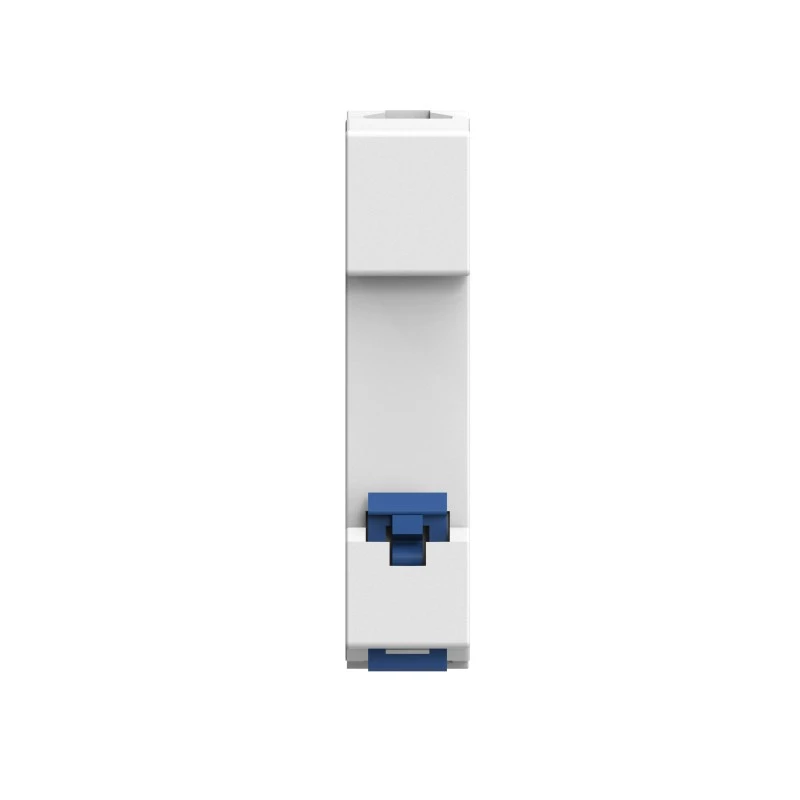
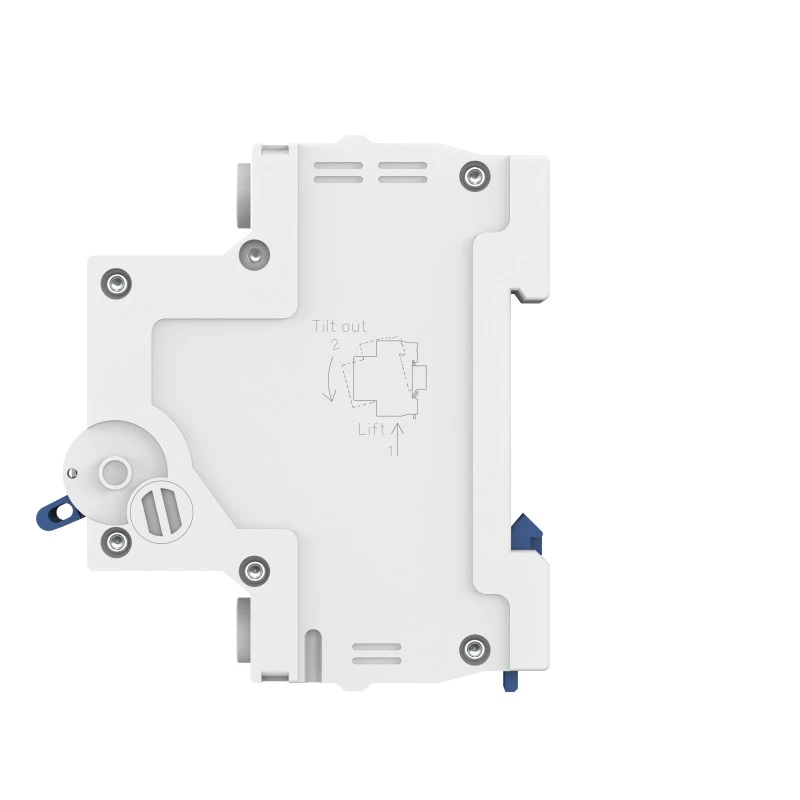
A control circuit is not a power circuit. PLC inputs, sensor supplies, lab instruments and access-control panels draw small, steady currents with very little start-up surge — which means a breaker selected by current rating alone is often the wrong device for the job.
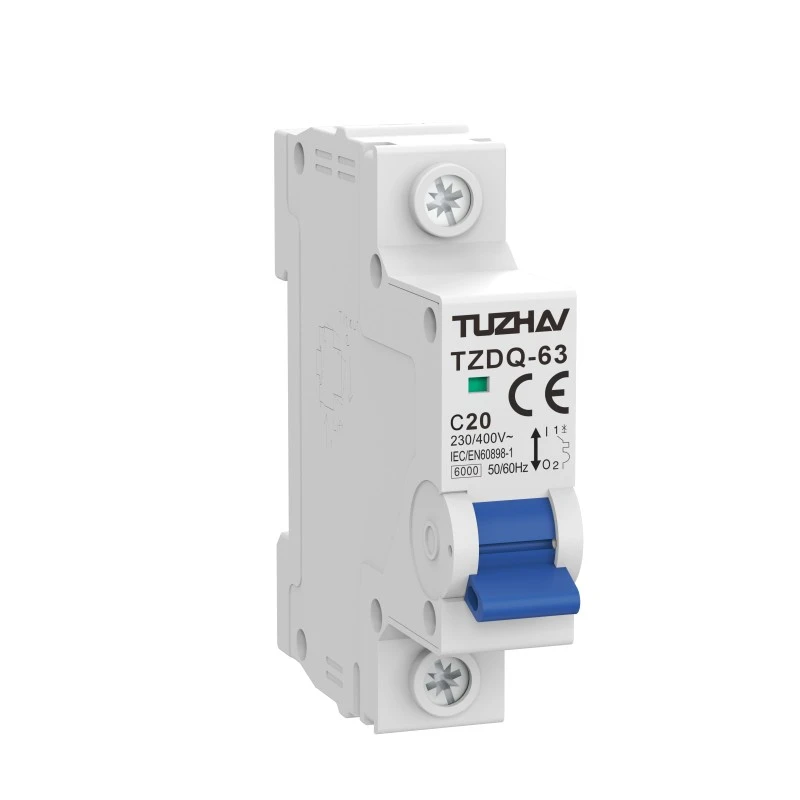
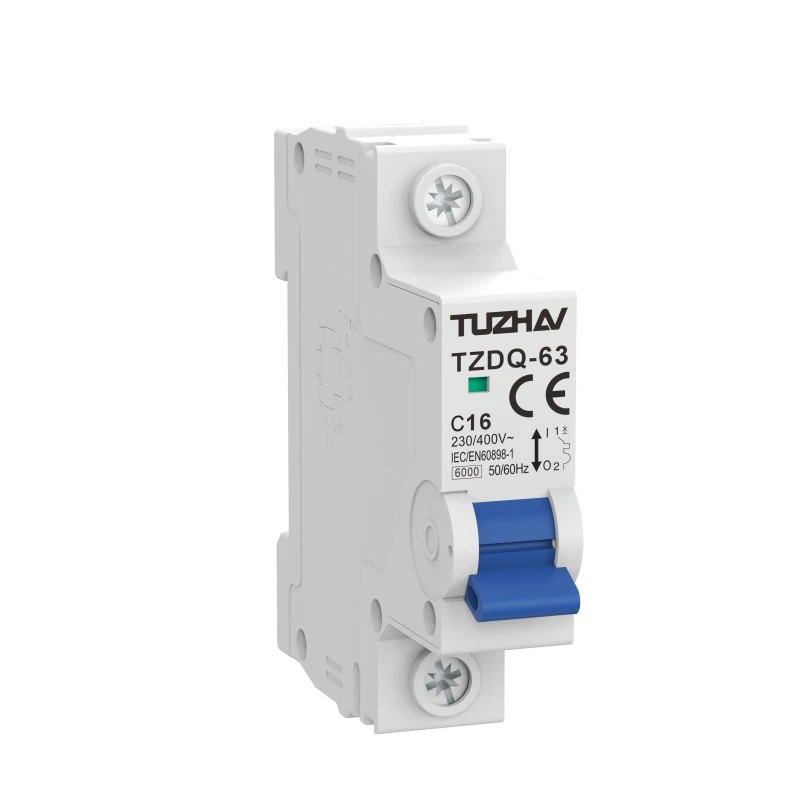
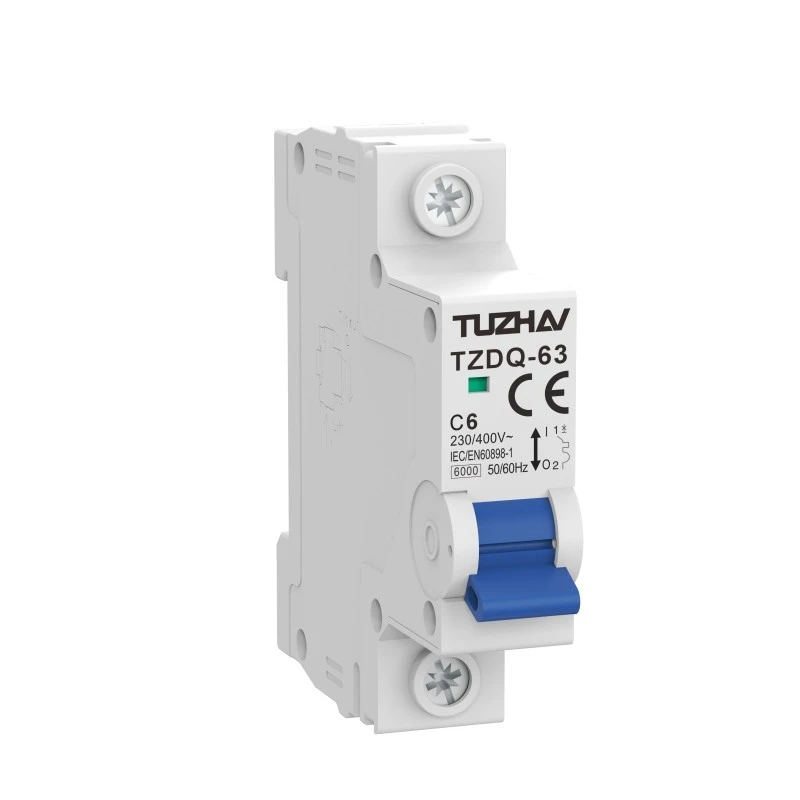
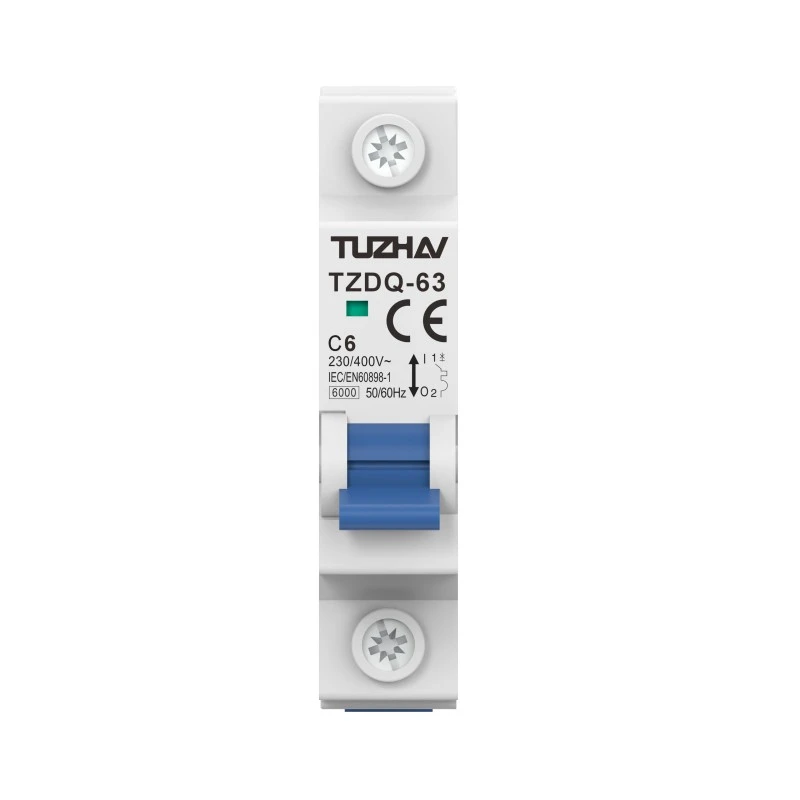
The 6A Miniature Circuit Breaker puts a thermal element and a magnetic element into one 18mm module. The B curve gives a low magnetic threshold that matches the low inrush these circuits actually produce, with C and D available where the load profile changes.
It mounts on 35mm DIN rail in 1P, 1P+N, 2P, 3P and 4P, with 6kA or 10kA breaking capacity chosen against the fault level at the panel. The three-position handle shows on, off or tripped without opening the enclosure.
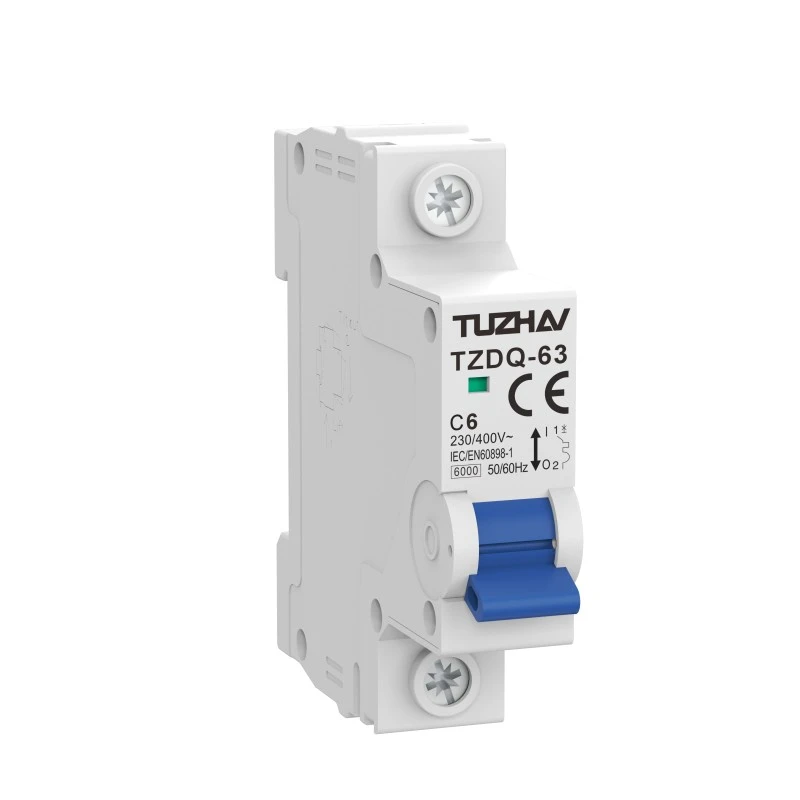
Control circuits fail selection in two opposite ways. Pick a breaker whose magnetic threshold sits too high and a genuine short on a sensor branch is cleared slowly — or not at all until something heats up. Pick one that sits too low and a switched-mode supply's start-up pulse trips the branch every time the cabinet is energised.
The B curve on this 6A device is designed for the first problem's opposite: a threshold low enough to clear a sensor-line fault promptly, high enough to ride a small inrush. What matters is that the curve is chosen from the load's actual start-up behaviour, not from the breaker's position in the range.
A 6A rating does not mean the breaker trips the moment current passes 6A. Overload response follows the time-current characteristic; only the magnetic element inside its band works instantly. If the circuit feeds a switching supply, a small transformer or any load with a noticeable start-up pulse, confirm the pulse against that band before the curve is locked.
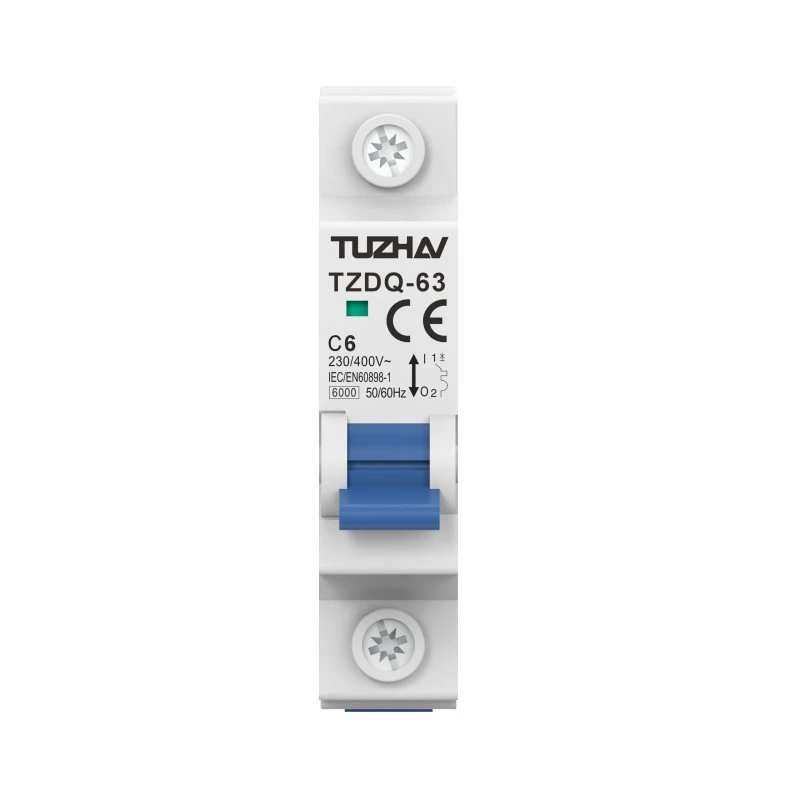
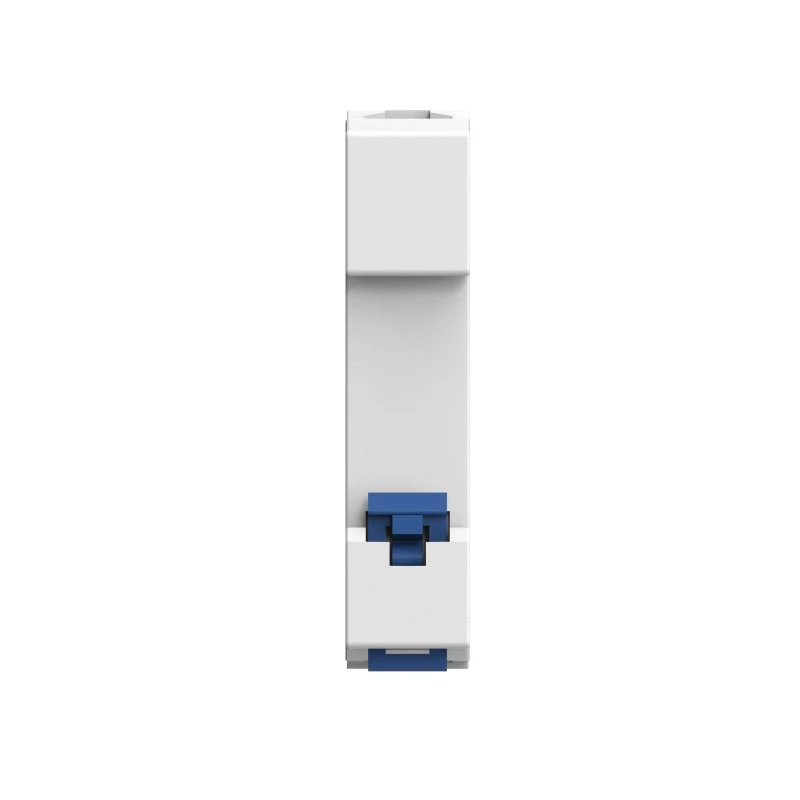
Confirm the exact model, rated voltage, breaking capacity, trip characteristics, temperature limits and applicable standards against the datasheet before final selection.
Where a circuit contains motors, transformers or switching power supplies with a real start-up surge, check that start-up profile against the curve before committing. The B curve is the right default for clean control loads; it is not the right answer for every auxiliary circuit.
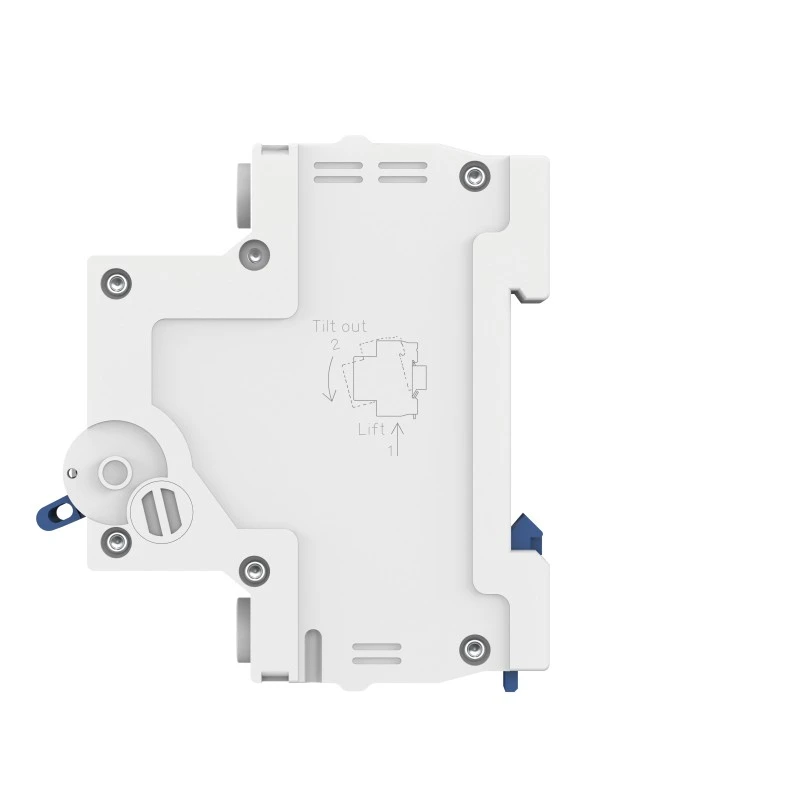
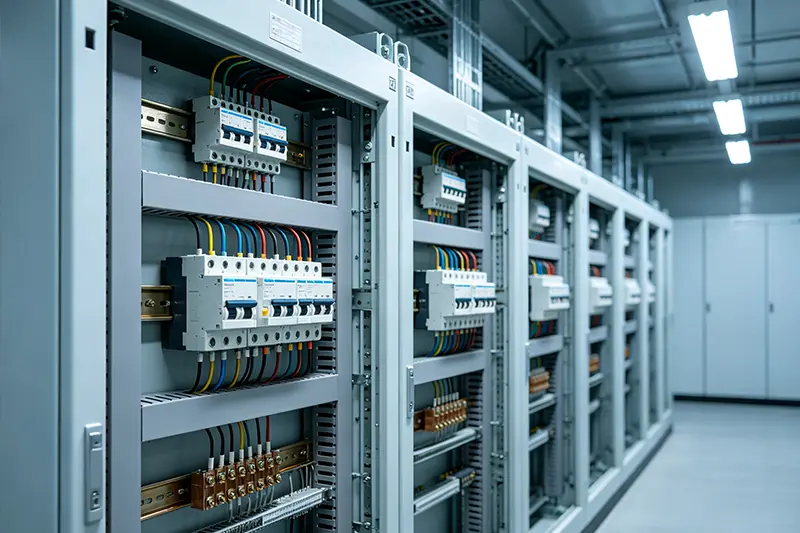
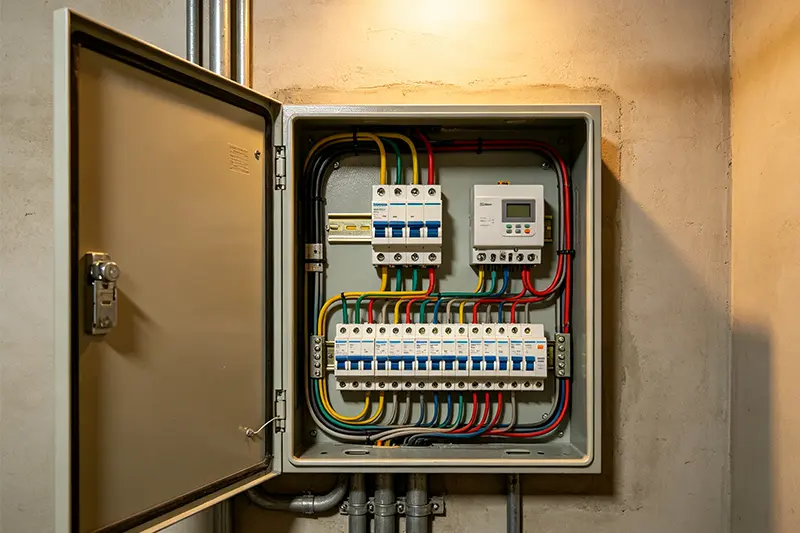
Inside an automation cabinet, the 6A MCB shares the rail with relays, contactors, power supplies and other protective devices. Six things are worth confirming before the layout is finalised:
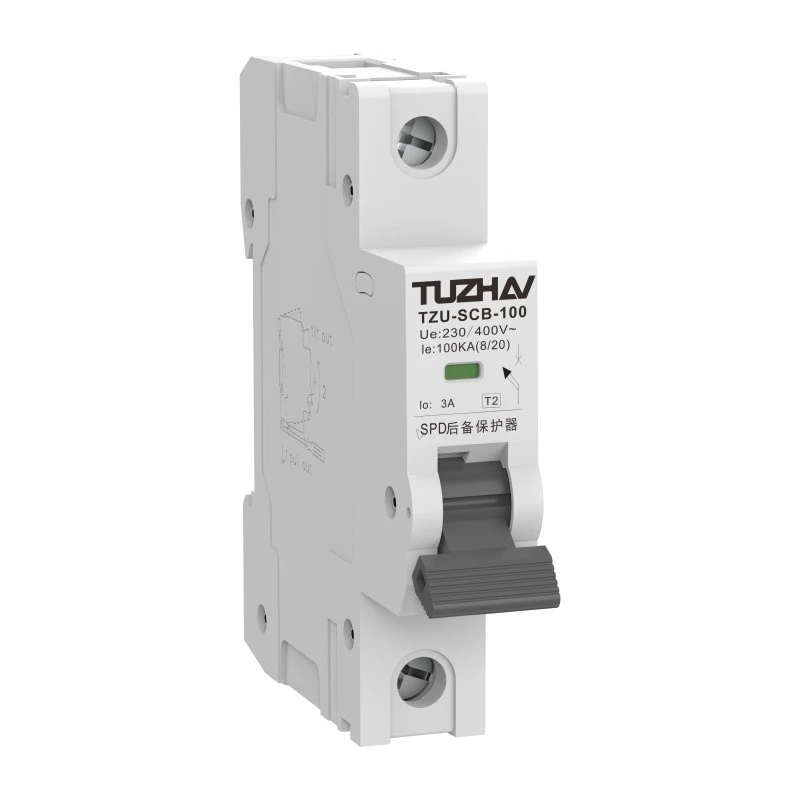
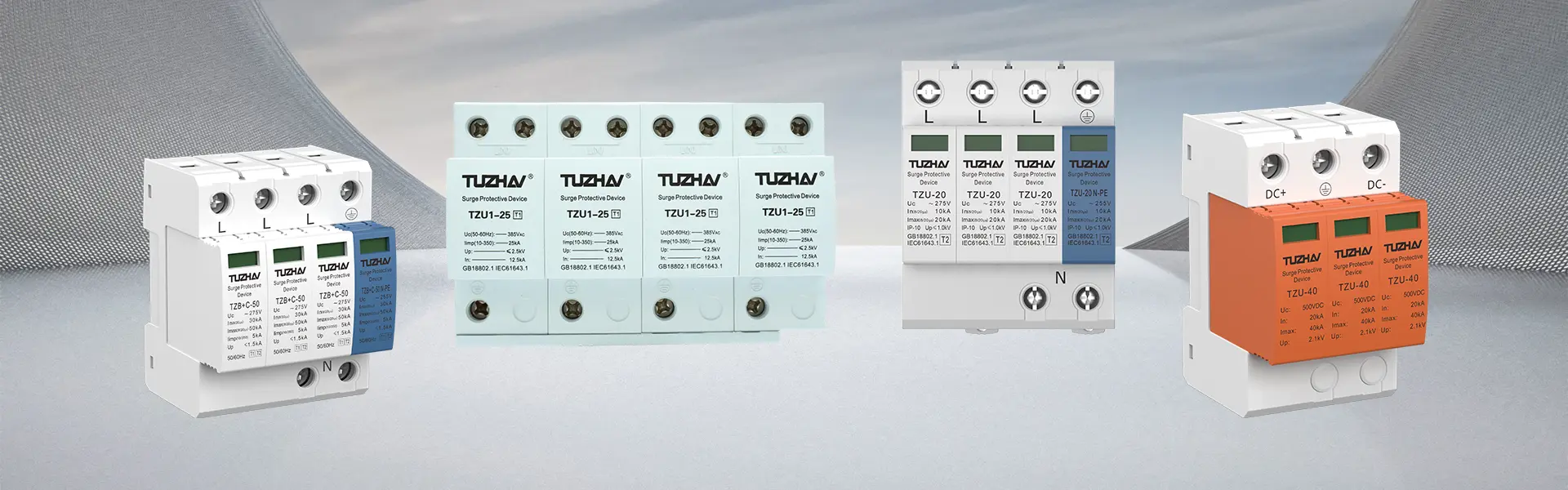
An SPD and an MCB do different jobs — the SPD limits transient overvoltage, the MCB clears overcurrent. Where surge protection forms part of the cabinet design, the SPD may need a dedicated backup protector per its manufacturer's instructions, and the whole layout should sit inside a distribution box sized for the clearances and conductor routing the design calls for.
Carton counts and pallet plans can be calculated from those quantities before the order is placed. Mixed-pole cartons, barcode labels and market-specific language sets can be arranged — tell us the destination and handling method and we will confirm the packing that fits.
Copper conductors, bimetallic elements and housing materials go through incoming sampling inspection. Finished units are checked for voltage withstand, continuity and mechanical operation, and batch samples are run for overload and short-circuit performance plus high- and low-temperature cycling.
Records are kept for the exact model. Where these documents matter for project approval, ask for the test conditions, sampling plan and reports — a stated test category does not by itself prove a particular service life.
OEM marking and packaging are supported, so the cover, handle and carton can carry your brand and language set — send the artwork and tell us how you want the marking customized. Production runs in our China factory, and as a manufacturer covering MCBs, SPDs and distribution boxes, one supplier can cover the whole cabinet protection package.
Traceability information and CE or IEC-related documents are confirmed for the selected model before shipment.
To keep the quotation on target, send the rated voltage and whether the circuit is AC or DC, the pole configuration, the preferred curve, the required breaking capacity, the panel dimensions and available space, the application and expected load characteristics, the standards and certificates you need, and the OEM marking and order quantity. The specification can then be checked against the intended application before the order is confirmed.
No. A B curve is generally chosen for circuits with relatively low inrush current. The selection has to account for the connected load, start-up current, cable characteristics and fault-clearing requirements. A C or D curve may be more appropriate for certain loads, provided the installation design supports it.
No. The 6A rating is the nominal rated current, not an instantaneous trip threshold. Thermal overload protection responds according to the magnitude and duration of the overload and the applicable time-current characteristic.
On models with this feature, an intermediate handle position indicates automatic tripping. After identifying and correcting the fault, follow the operating instructions to reset the handle and restore power. Do not re-energise a circuit until the cause of the trip has been investigated.
A DC-specific version may be available, but the standard AC rating should not be assumed to apply to DC. Confirm the DC voltage, polarity requirements where applicable, pole arrangement and DC breaking capacity for the exact model.
The breaking capacity must suit the prospective short-circuit current at the installation point. The 6kA and 10kA options should be evaluated against the electrical system design and the applicable product rating — a higher figure should not be chosen solely on rated current.
Units go into a neutral paper box of 220 × 96 × 73mm — 12 pcs for 1P, 6 pcs for 2P, 4 pcs for 3P and 3 pcs for 4P — then into a five-layer corrugated outer carton of 50.5 × 31 × 23.5cm. Custom printed inner boxes, labels and language sets are available.
OEM marking and packaging can be arranged for the required model. Confirm the artwork, marking method, packaging specification, minimum order quantity and lead time before placing the order.
Request the datasheet, dimensional drawing, time-current characteristic and the available certification or test documents. For projects with specific approval requirements, verify that the documents cover the exact model, voltage rating and breaking capacity being supplied.
We will confirm the 6A Miniature Circuit Breaker curve, pole configuration and breaking capacity for your control cabinet, and reply with pricing, samples, packing plan and lead time.
Address
No.51, Changjiang Road, Wenzhou Bridge Industrial Zone, Beibaixiang Town, Yueqing City, Zhejiang Province, China
Tel