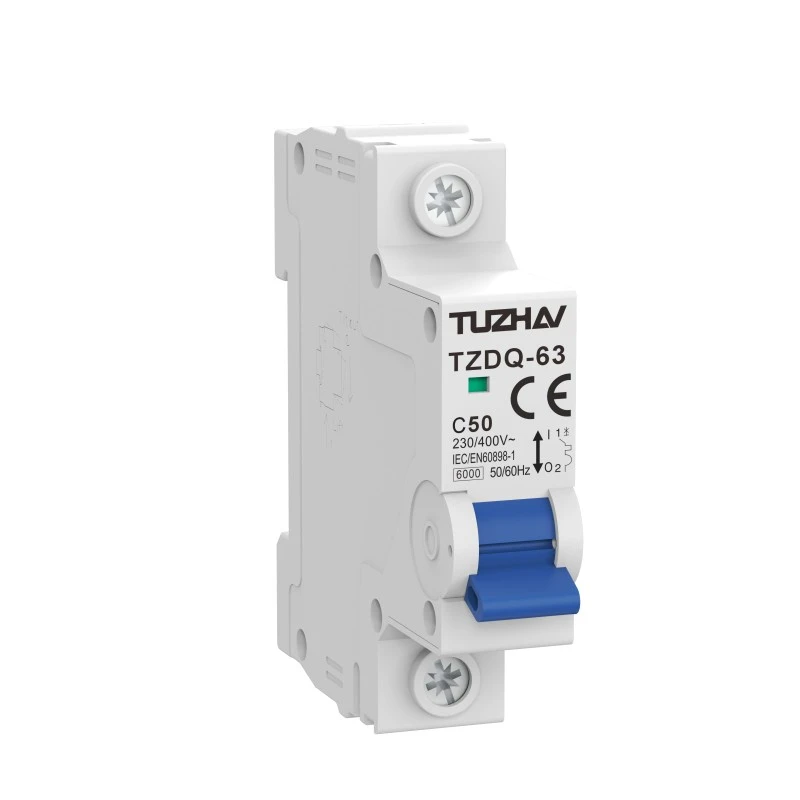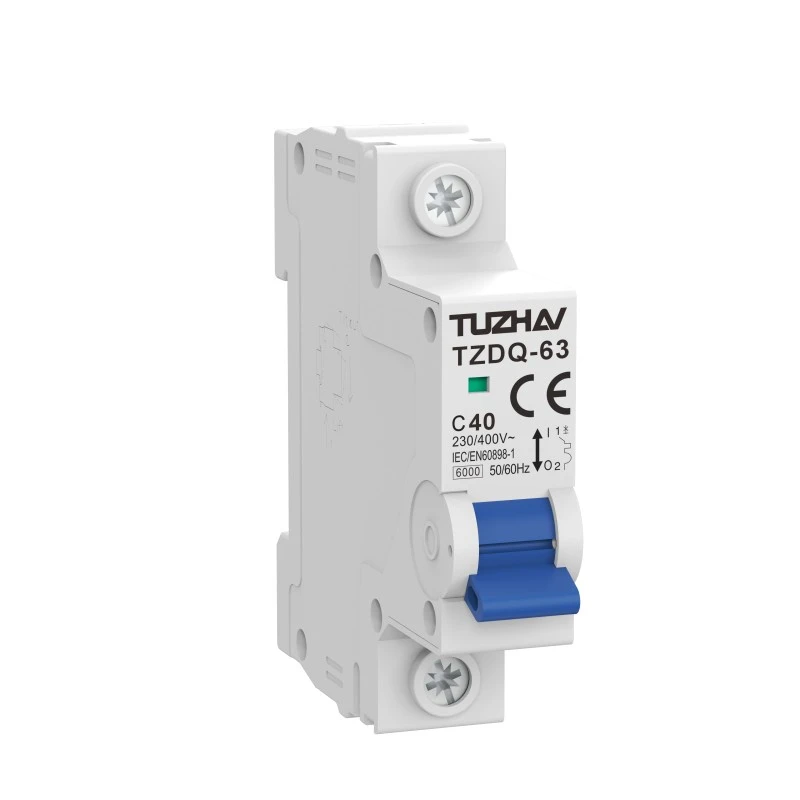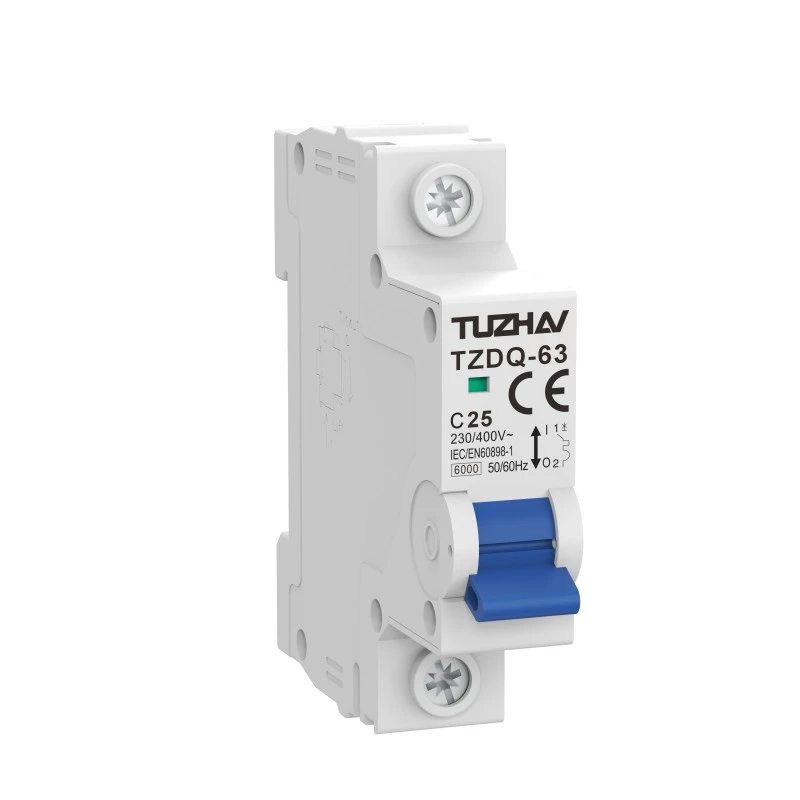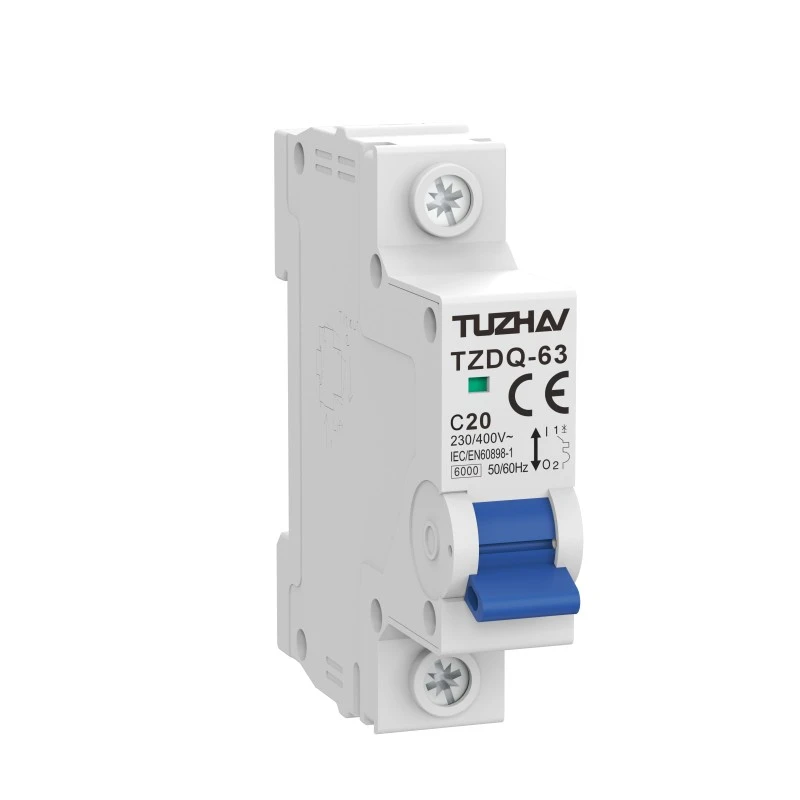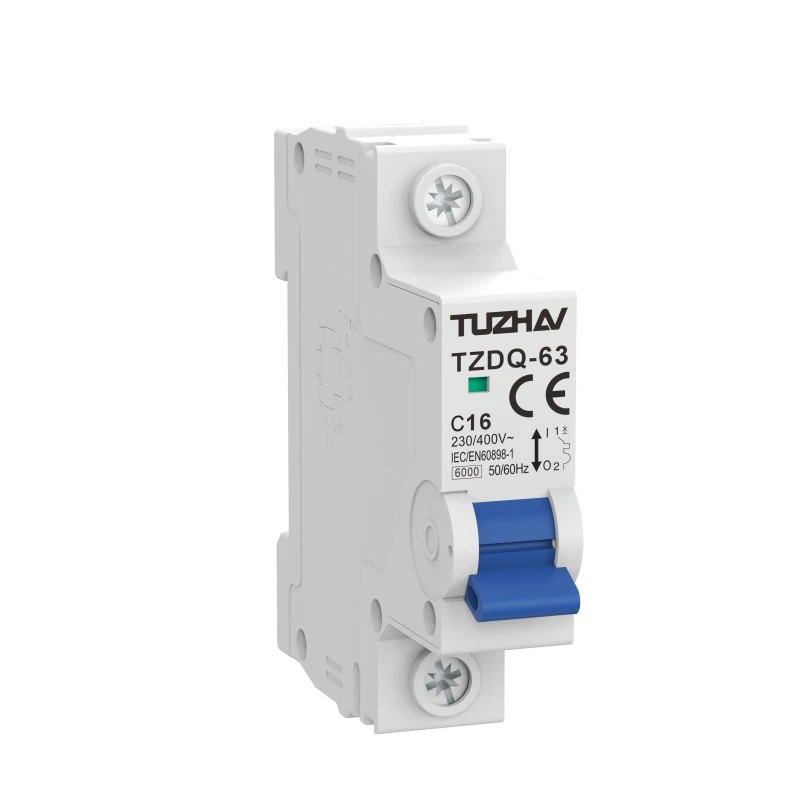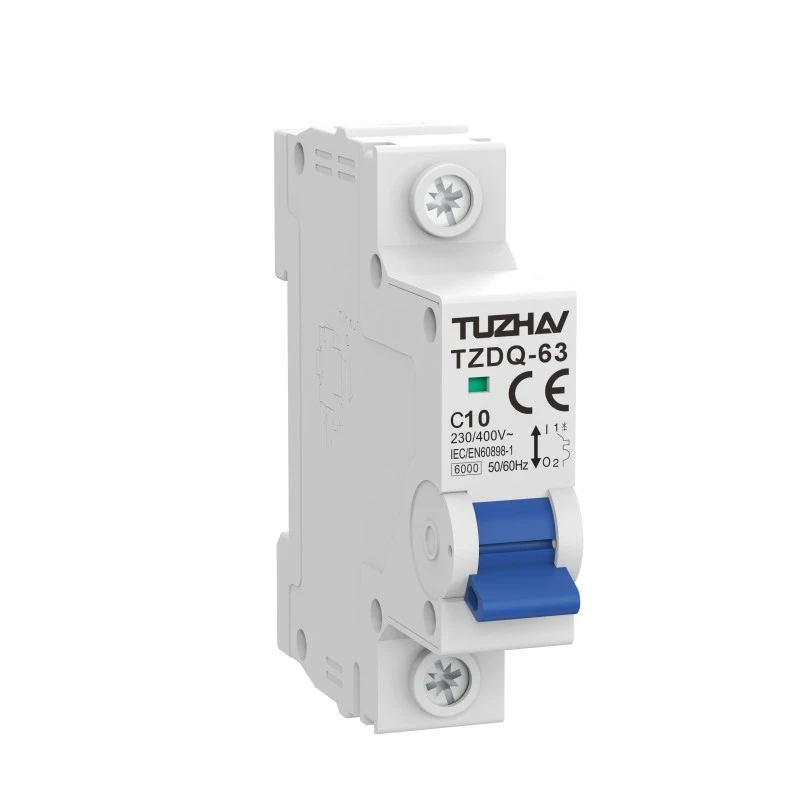
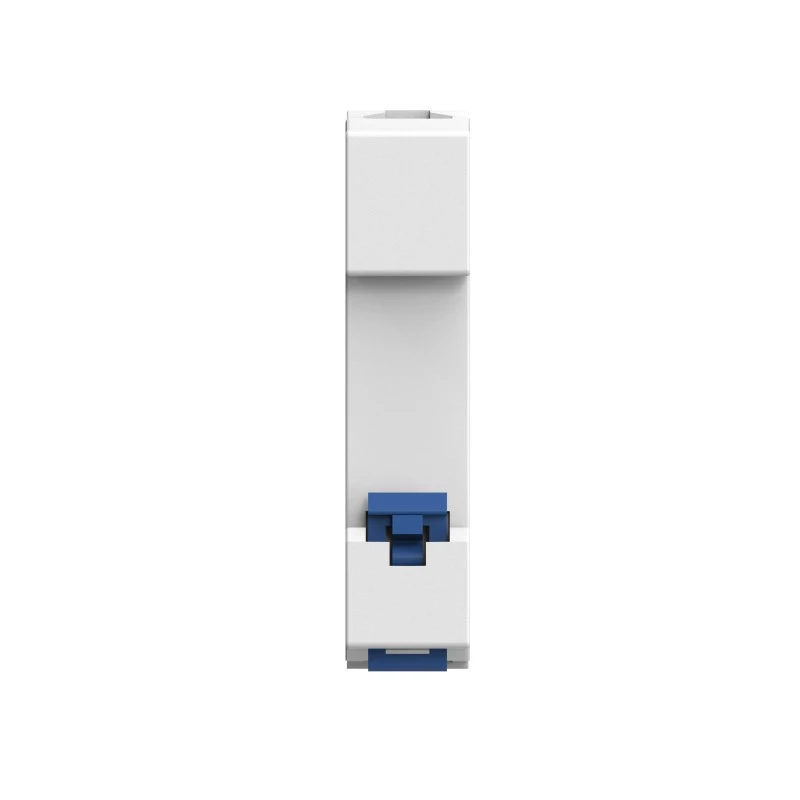
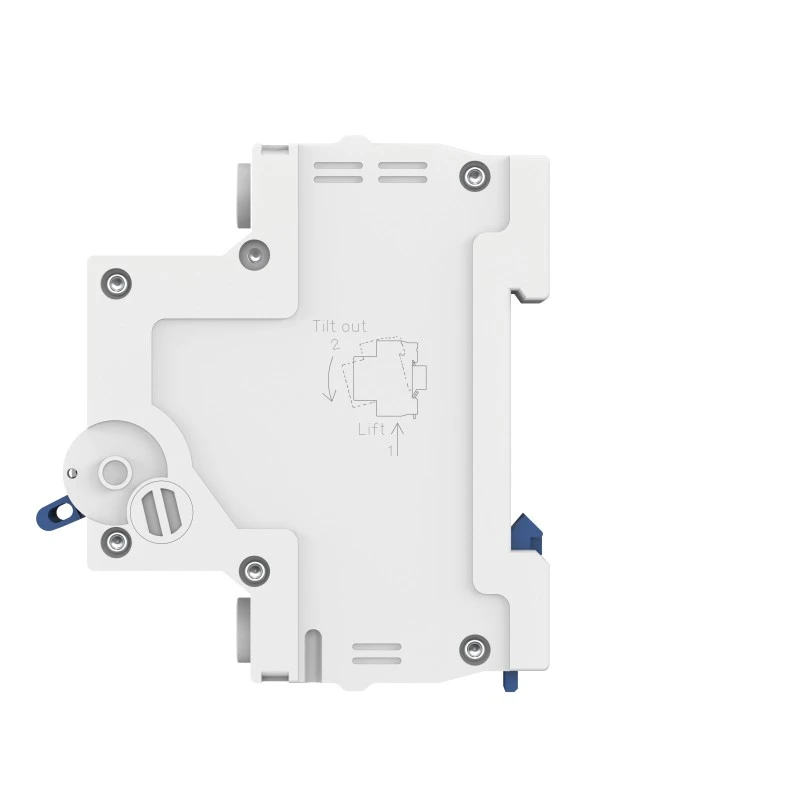
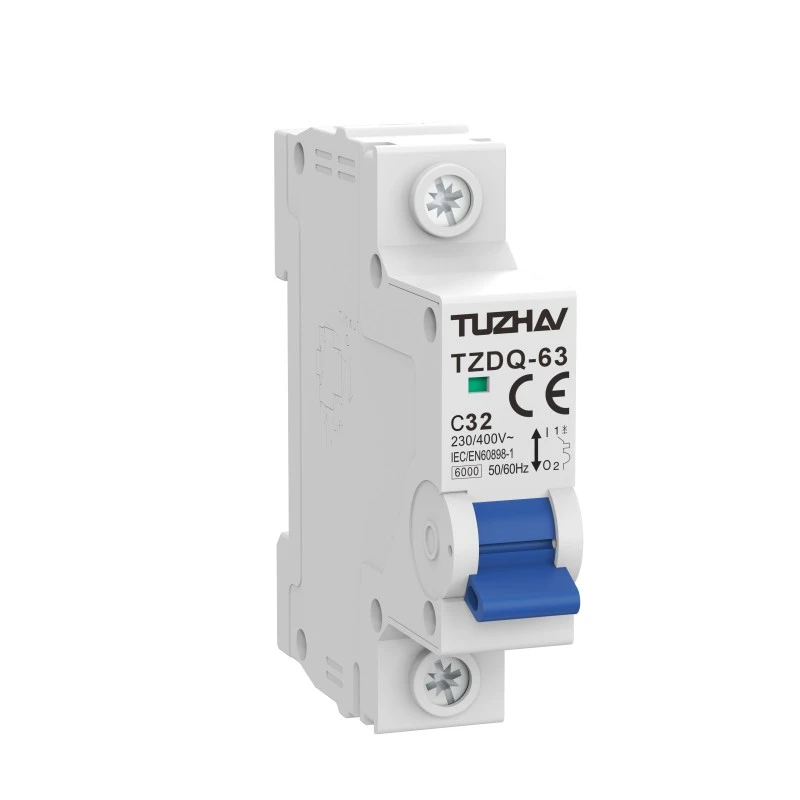
A 32A branch is usually feeding something heavier than a socket circuit — a single-phase AC EV charging point, a small air compressor, a high-power single-phase appliance. What those loads have in common is a higher running current and often a start-up surge that the breaker has to ride through without tripping.
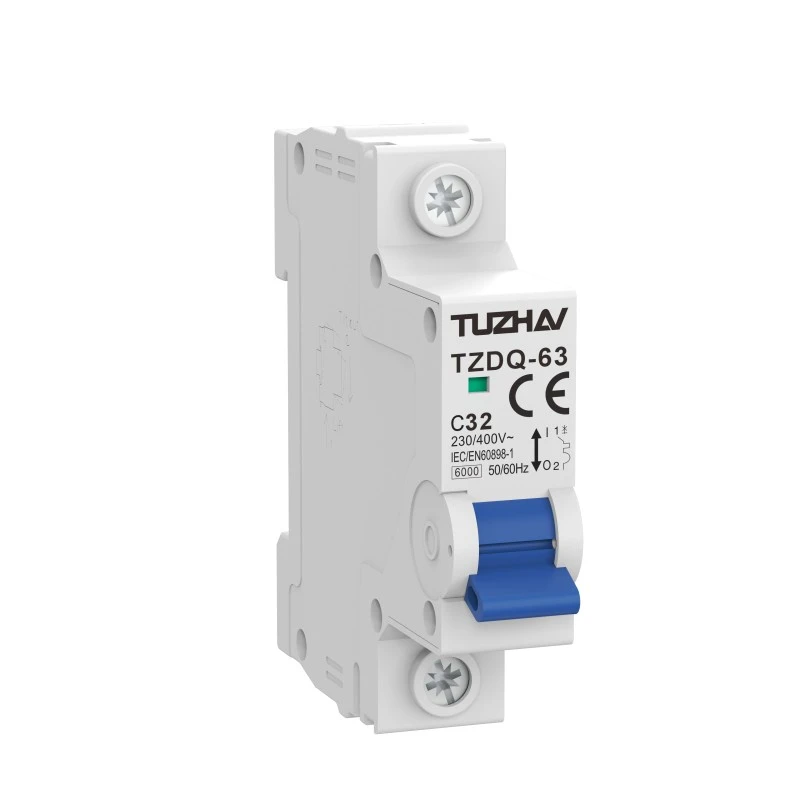
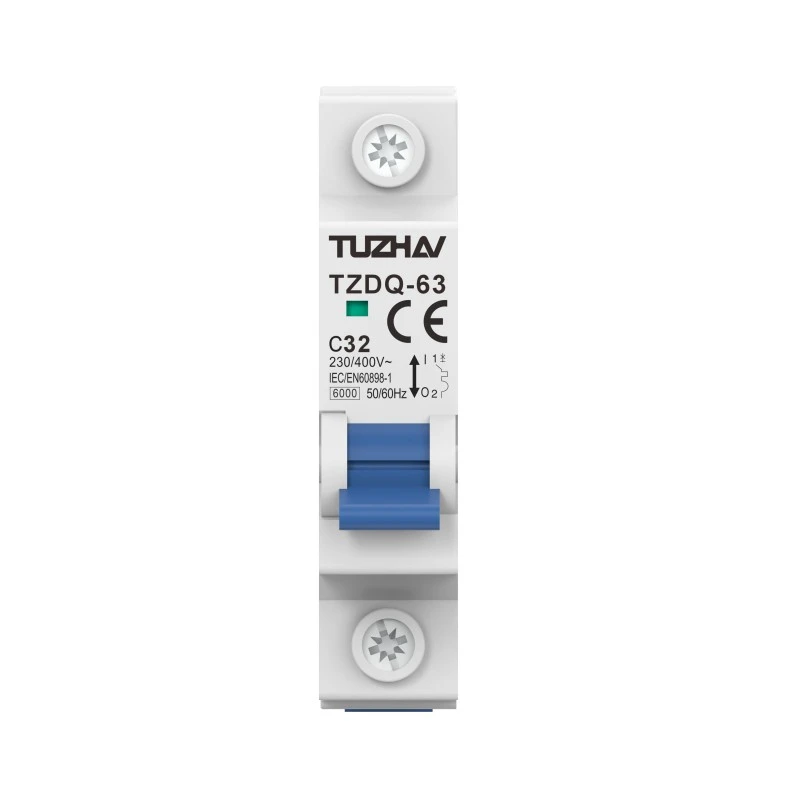
The 32A Miniature Circuit Breaker handles both sides of that job. The thermal element responds to sustained overload, the magnetic element clears a high fault current, and C and D curves are both available so the magnetic threshold can be matched to the actual inrush behaviour of your load. Breaking capacity comes in 6kA or 10kA, chosen against the fault level at the point of installation.
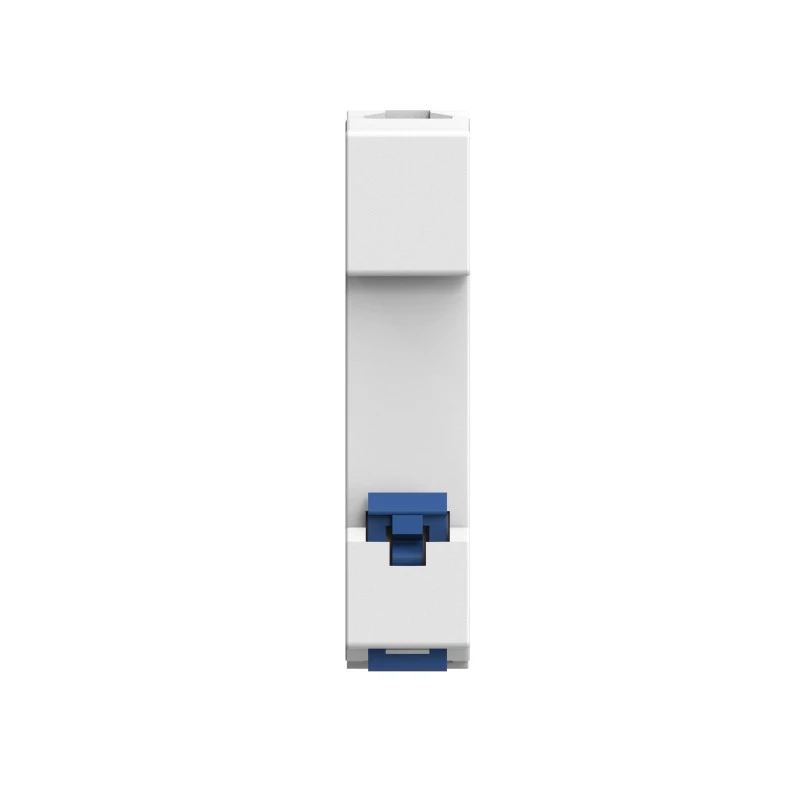
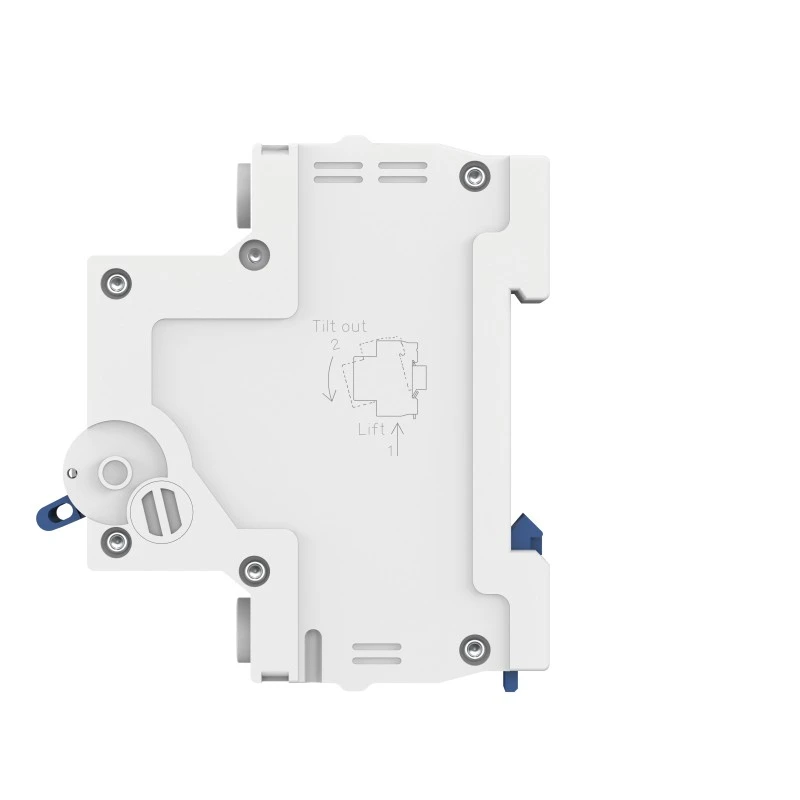
Mounting is standard 35mm DIN rail in 1P, 1P+N, 2P, 3P and 4P, with a three-position handle that shows on, off or tripped. The housing is flame-retardant PC.
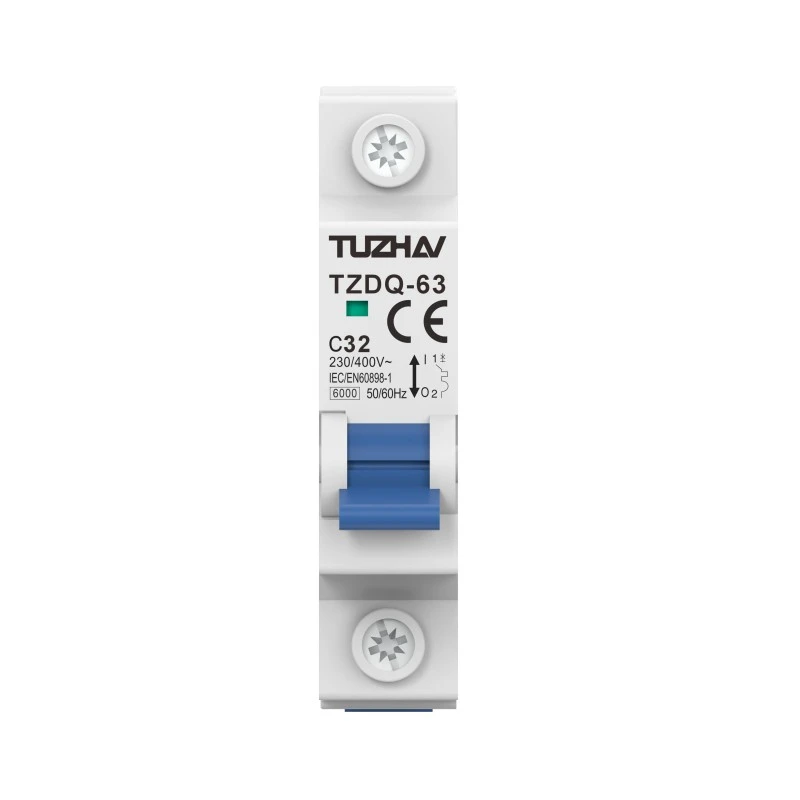
| Product Type | Miniature Circuit Breaker (MCB) |
| Rated Current | 32A |
| Tripping Curve | C curve standard; D curve optional |
| Rated Voltage | AC 230V / 400V; DC version available on request |
| Breaking Capacity | 6kA / 10kA options |
| Pole Configurations | 1P, 1P+N, 2P, 3P, 4P |
| Mounting | 35mm DIN rail |
| Housing Material | Flame-retardant PC |
| Handle Indication | Three-position handle with trip indication |
| Operating Temperature | -25°C to +70°C |
| Protection Degree | IP20; install inside a suitable enclosure |
| Single-Pole Dimensions | 18mm wide × 80mm high × 66mm deep |
| Reference Standards | IEC 60898-1, GB 10963.1 |
Confirm the voltage rating, pole configuration, breaking capacity and applicable standard for the exact model before it goes into a project specification.
A charger described as "single-phase" is not automatically a 32A load. Before the breaker is fixed, five points have to line up with the charger's own documentation and the installation design:
The continuous input current must sit inside the breaker's rating and the installation requirements — not just close to it on a nameplate.
Conductor size follows installation method, insulation, ambient temperature, grouping and route length. Whether 6mm² or 10mm² works depends on those conditions, not on the breaker rating alone.
An MCB does not provide residual-current or DC residual-current protection. Confirm from the charger manufacturer and local regulations whether additional RCD devices are required.
The chosen breaking capacity must cover the prospective short-circuit current at the installation point. 6kA and 10kA are not interchangeable.
Match the configuration to the supply system and the isolation requirements that apply where the charger is installed.
Where a parking area carries several chargers, each branch gets its own protection, but upstream capacity and load management still have to be designed as one system. Isolating one faulted branch is only half the job.
Suitability for each case depends on the equipment rating, the circuit design and the MCB configuration selected.
The curve changes the magnetic operating range, so it should come from the measured electrical behaviour of the load — not from the application category alone.
| Selection Point | C Curve | D Curve |
| Typical magnetic tripping range | 5–10 × rated current | 10–20 × rated current |
| Selection consideration | Loads with moderate inrush current | Loads that may have higher inrush current |
| Essential check | Start-up profile and fault protection | Start-up profile, fault protection and required disconnection conditions |
These are typical ranges under the relevant standard. A D-curve breaker does not make a circuit more suitable for an EV charger, and it does not guarantee that start-up tripping will not occur — its higher magnetic threshold may also stretch the fault-disconnection conditions the installation has to meet. The charger manufacturer's instructions and the fault-protection requirement take priority.
An MCB provides overload and short-circuit protection inside its rated characteristics. It is one part of the protection arrangement, not the whole of it. In an EV charging installation the roles divide like this:
Overload and short-circuit protection for a compatible branch circuit.
Protection against residual-current faults as specified by the installation design.
Limits transient overvoltage within the specified surge protection arrangement.
Switches the supply as part of the charging control system.
Where surge protection is required, an SPD may be added — together with an SPD backup protector where the SPD manufacturer calls for dedicated backup disconnection. An SPD does not replace an MCB, and an MCB does not replace residual-current protection. Device selection and coordination follow the charging equipment's requirements and the applicable standards.
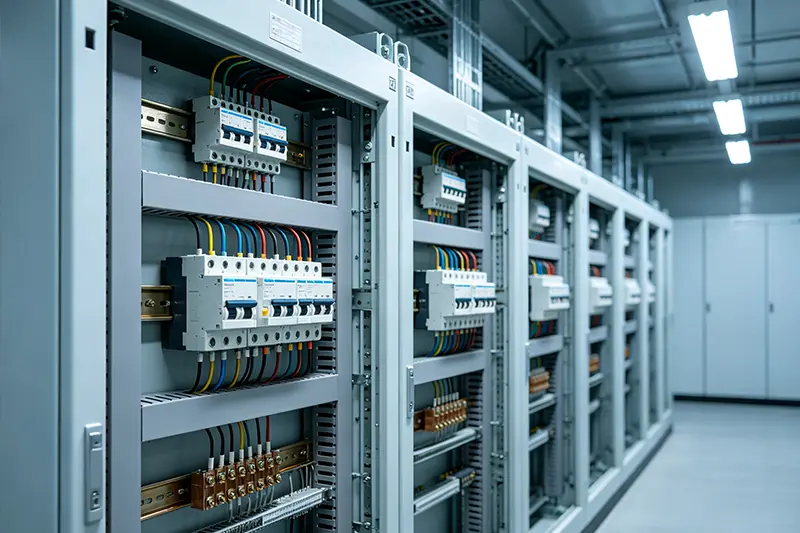
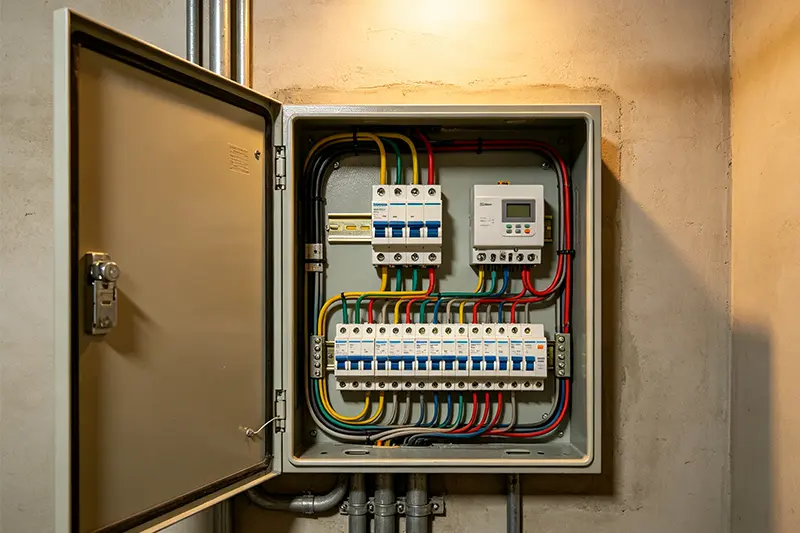
Standard 35mm DIN rail mounting, single-pole dimensions 18mm × 80mm × 66mm. With an IP20 rating the device is installed inside a suitable enclosure, so allow for ambient temperature, conductor routing and heat dissipation when the panel layout is drawn.
For panel builders, the whole protection package can come from one place: MCBs, SPDs, SPD backup protectors and distribution boxes.
OEM printing is supported, so the cover, handle and packaging can carry your brand, part number and language set — send the artwork and tell us how you want the marking customized. Production runs in our China factory, and as a manufacturer covering MCBs, SPDs and distribution boxes, one supplier can handle the protection package for a panel project.
For a quotation, confirm rated voltage, tripping curve, pole configuration, breaking capacity, logo or label artwork and the market-specific documents you need.
Quality control covers incoming material checks, controlled assembly, calibration of the thermal and magnetic elements, and a routine trip test on every unit before packing. Records are kept for the exact model — test data, traceability information and conformity declarations where available. Referencing IEC 60898-1 or GB 10963.1 does not by itself establish third-party certification, so check the documents against the model you are ordering.
Confirm MOQ, sample arrangements, lead time and warranty terms for the actual order.
It may be suitable when the charger's rated input current, installation instructions, cable capacity and local requirements all support that selection. Confirm the specified circuit protection with the charger documentation before installation.
Cable size cannot be decided from the breaker rating alone. Either conductor may be suitable in some installations, but the correct choice depends on installation method, cable length, voltage drop, ambient conditions, grouping and local wiring rules. Have the circuit verified by a qualified electrical professional.
No. An AC MCB is intended for a compatible AC circuit. A DC circuit requires a breaker rated specifically for the DC voltage, current and fault conditions involved. Follow the charging equipment manufacturer's protection requirements.
No. The curve should match the equipment's inrush characteristics and the circuit's fault-protection requirements. Do not select a D curve without verifying that the required fault-disconnection conditions can still be met.
Breaking capacity has to match the prospective short-circuit current at the installation point. A rating above that level is fine, but the figure alone does not make a device appropriate for every circuit — current rating, curve, poles and coordination all have to fit.
OEM printing is supported. Confirm the requested configuration, artwork, MOQ, sample availability and the compliance documents you need before placing an order.
We will confirm the 32A Miniature Circuit Breaker curve, pole configuration and breaking capacity for your circuit, and reply with samples, pricing and lead time.
Address
No.51, Changjiang Road, Wenzhou Bridge Industrial Zone, Beibaixiang Town, Yueqing City, Zhejiang Province, China
Tel