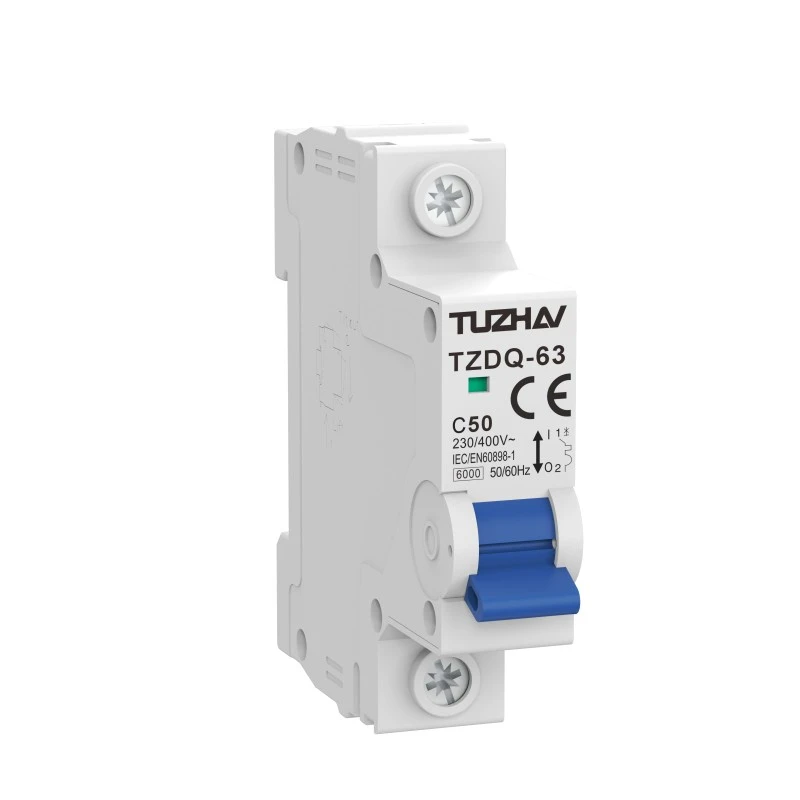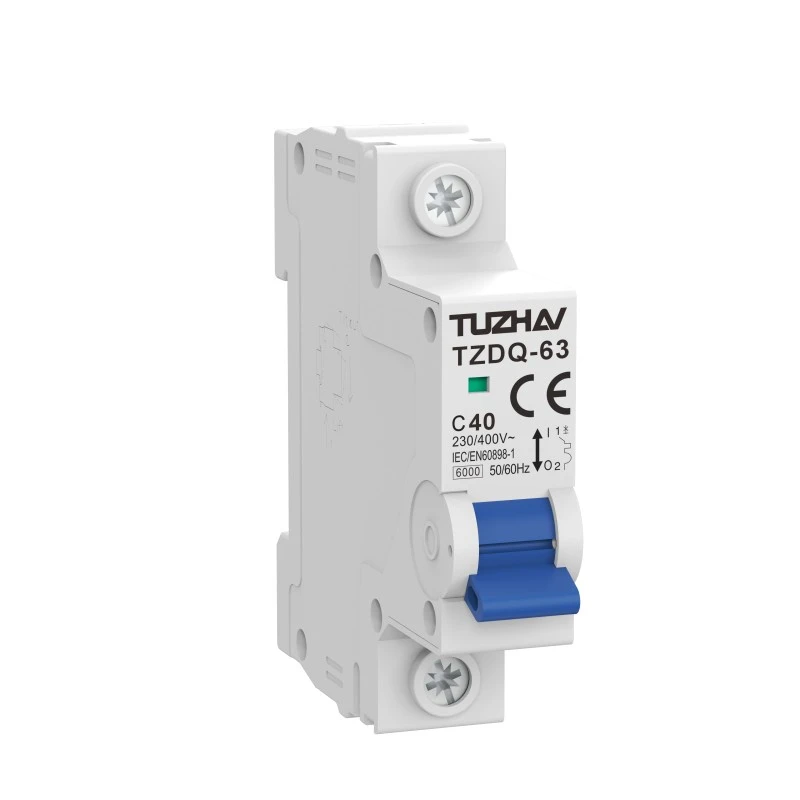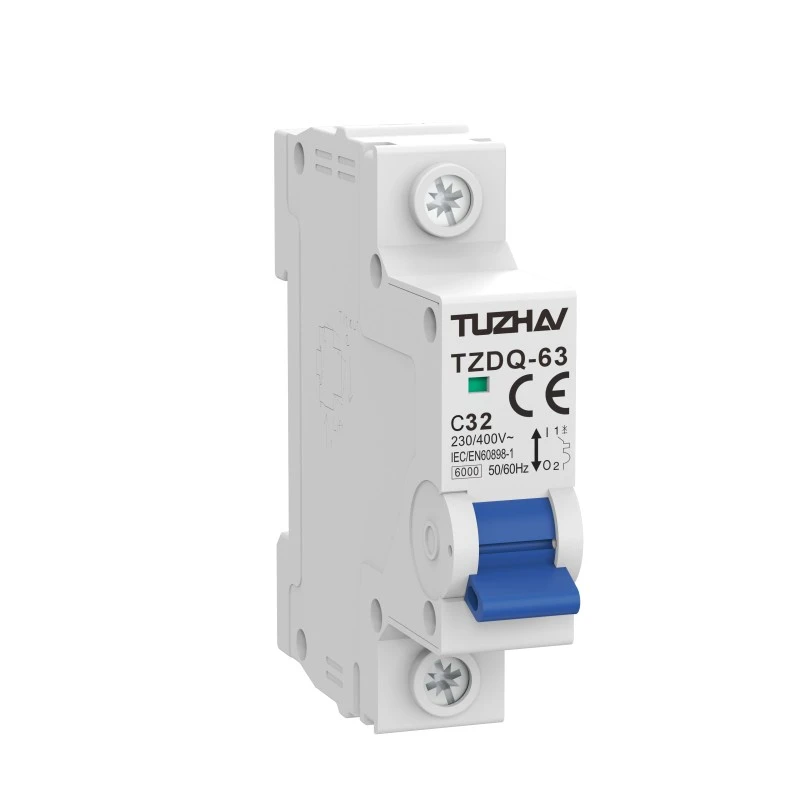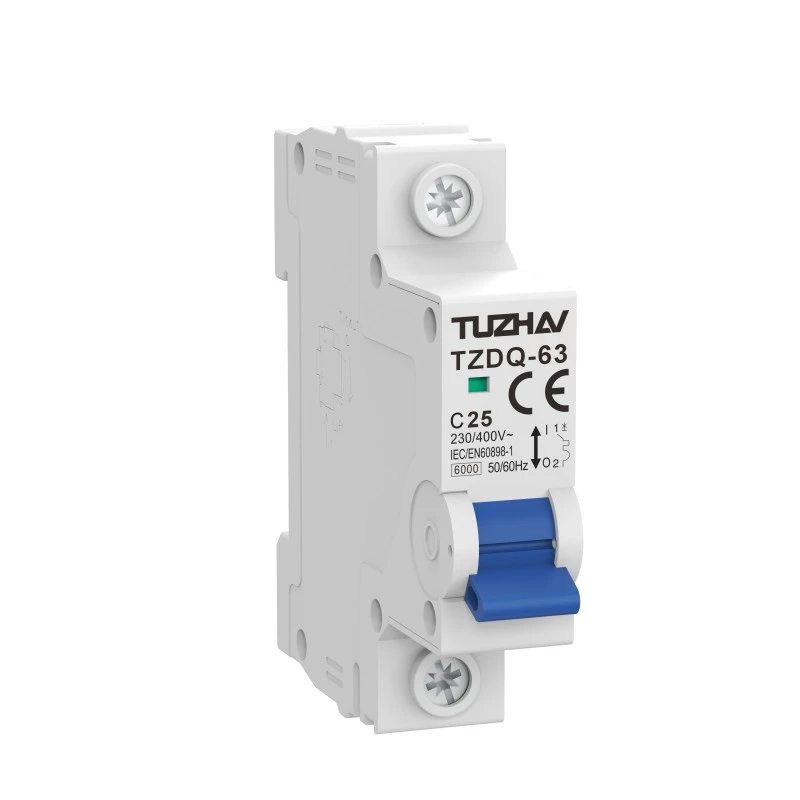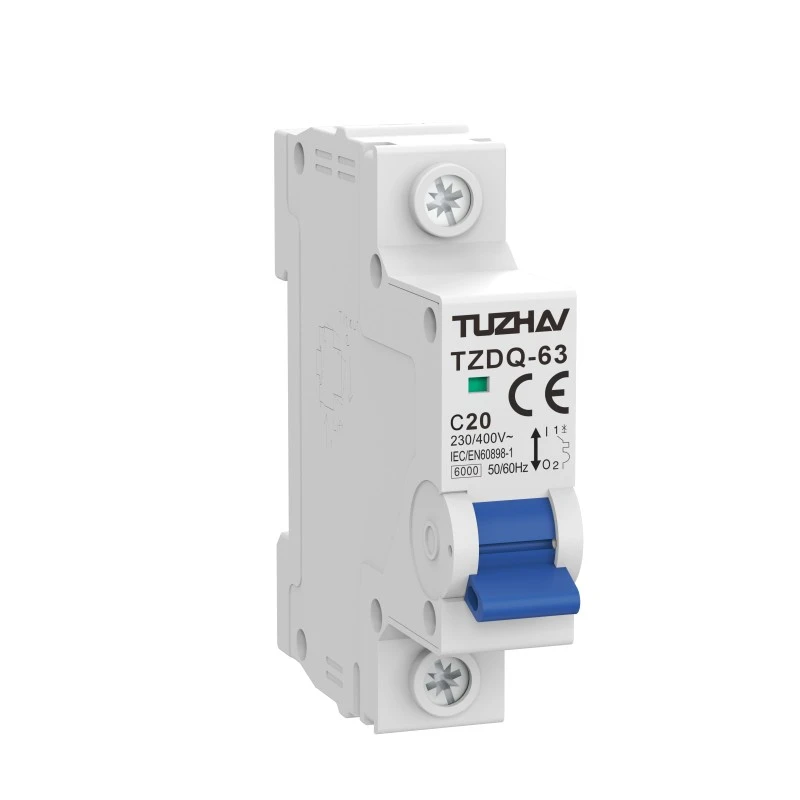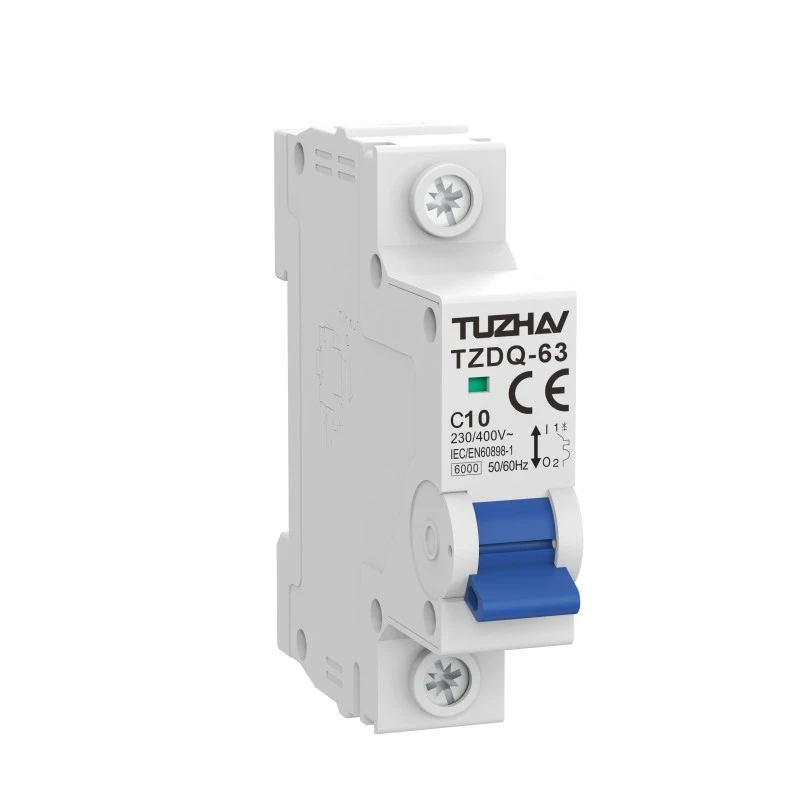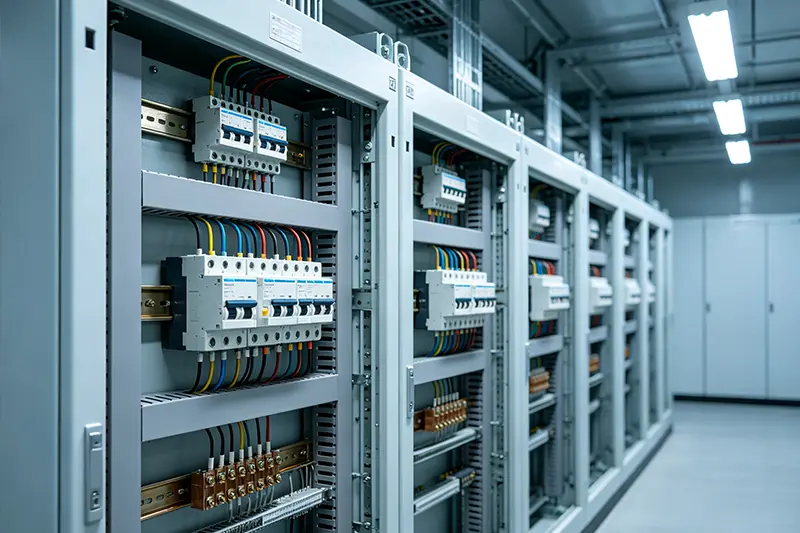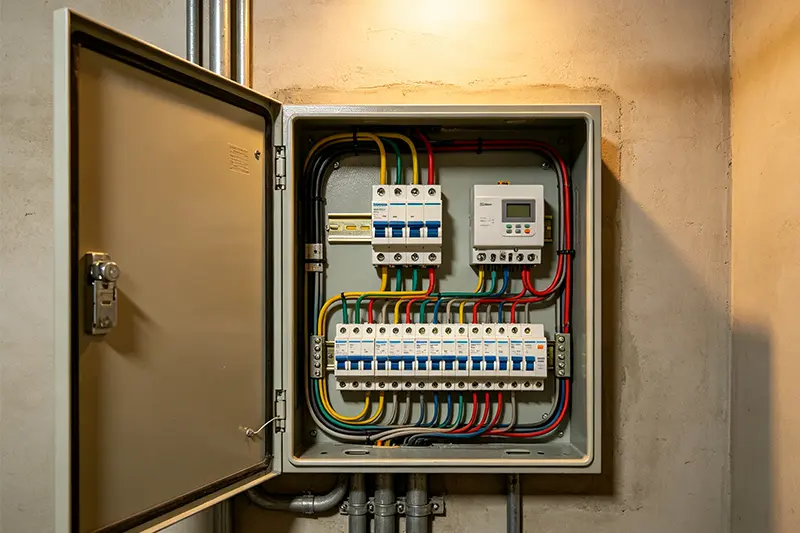
A socket circuit in a home or office carries whatever gets plugged into it — computers, printers, a fridge, a kettle, a vacuum. Those loads come and go independently, which means the breaker has to be sized for the circuit design, not for one appliance.
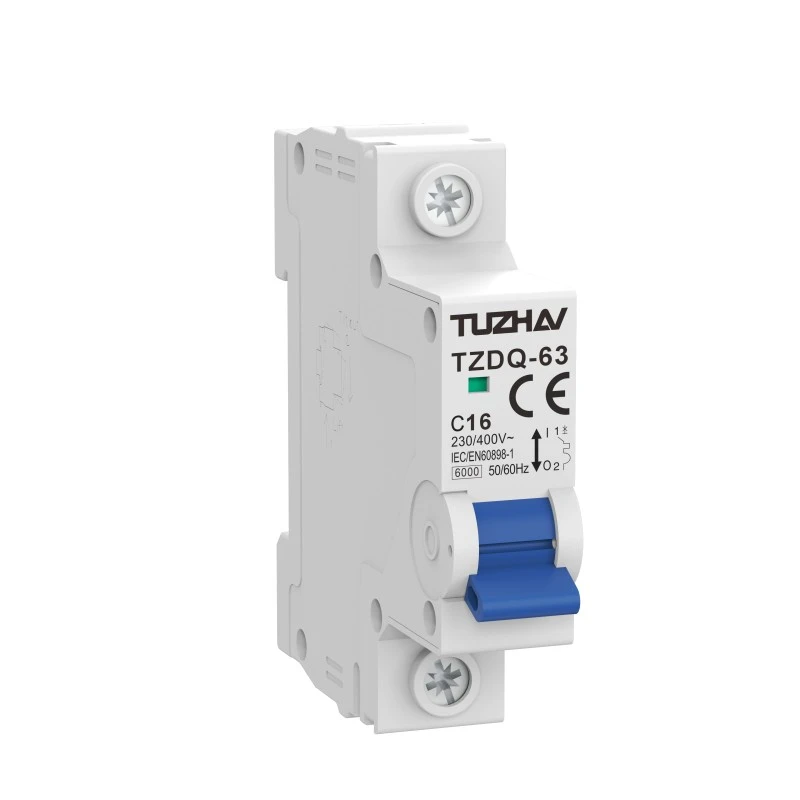
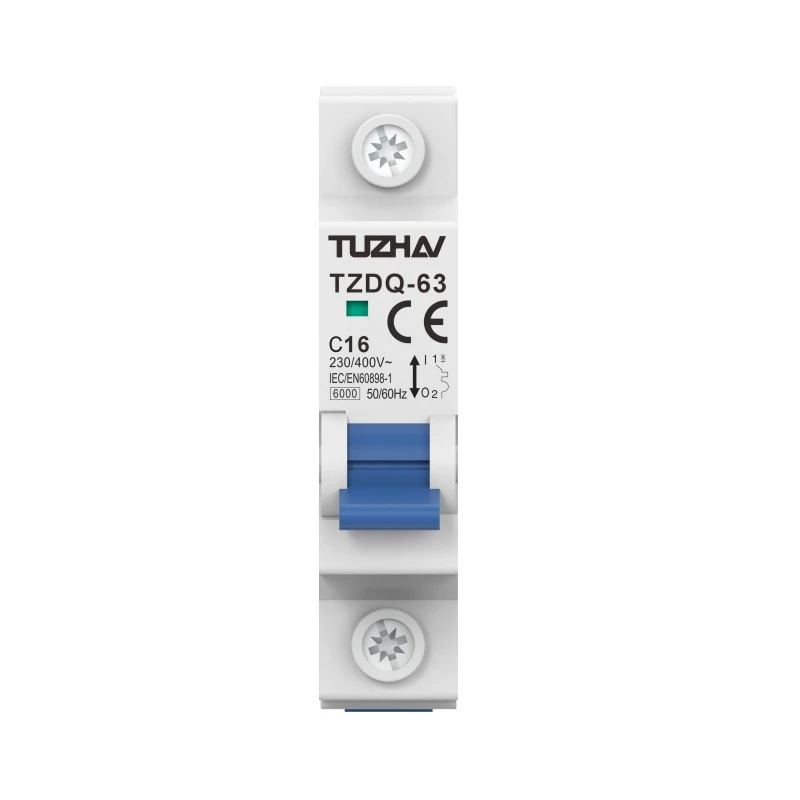
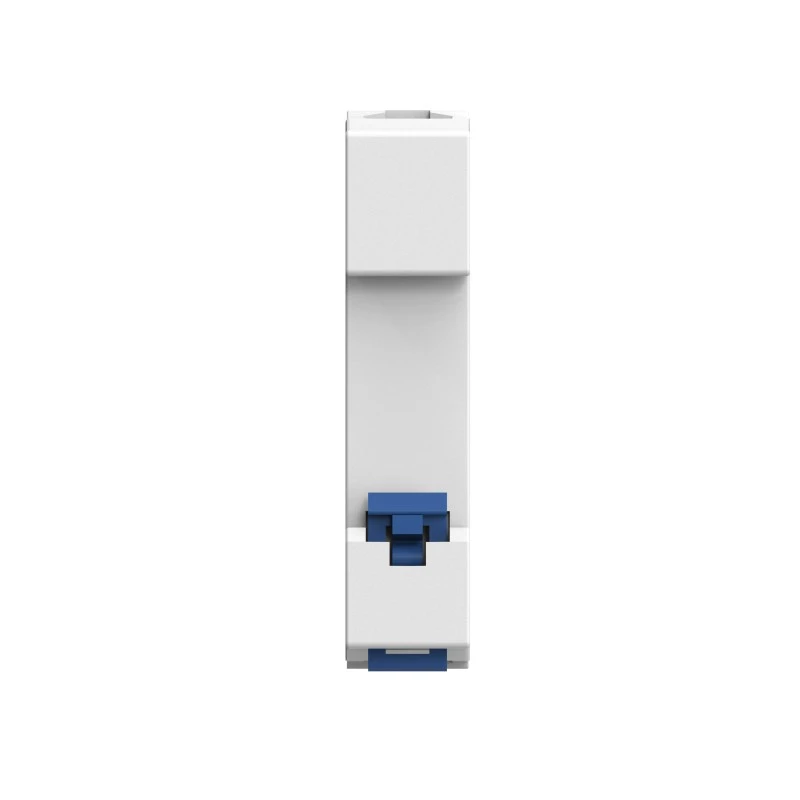
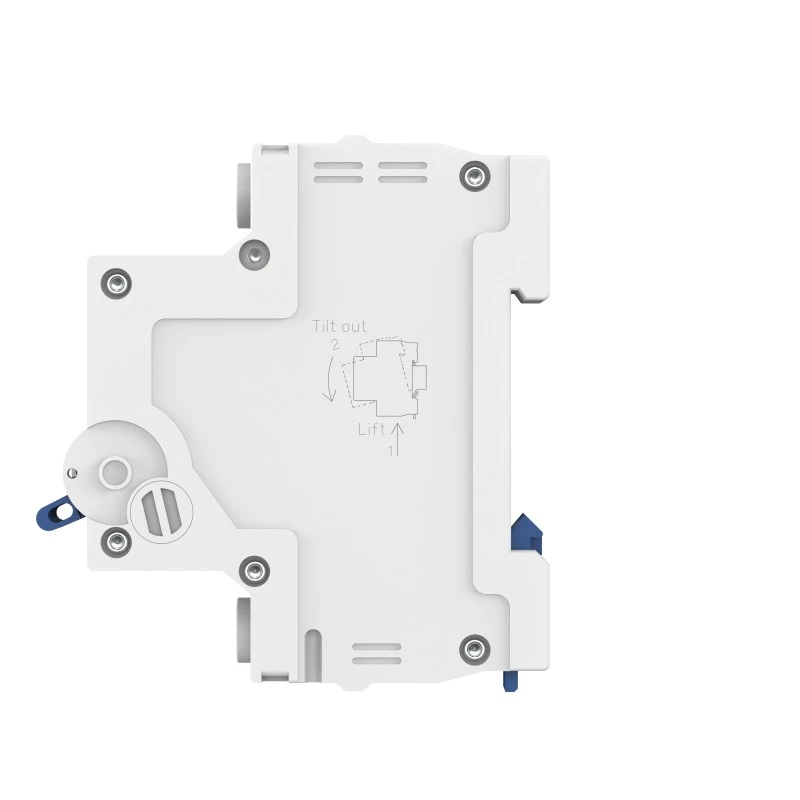
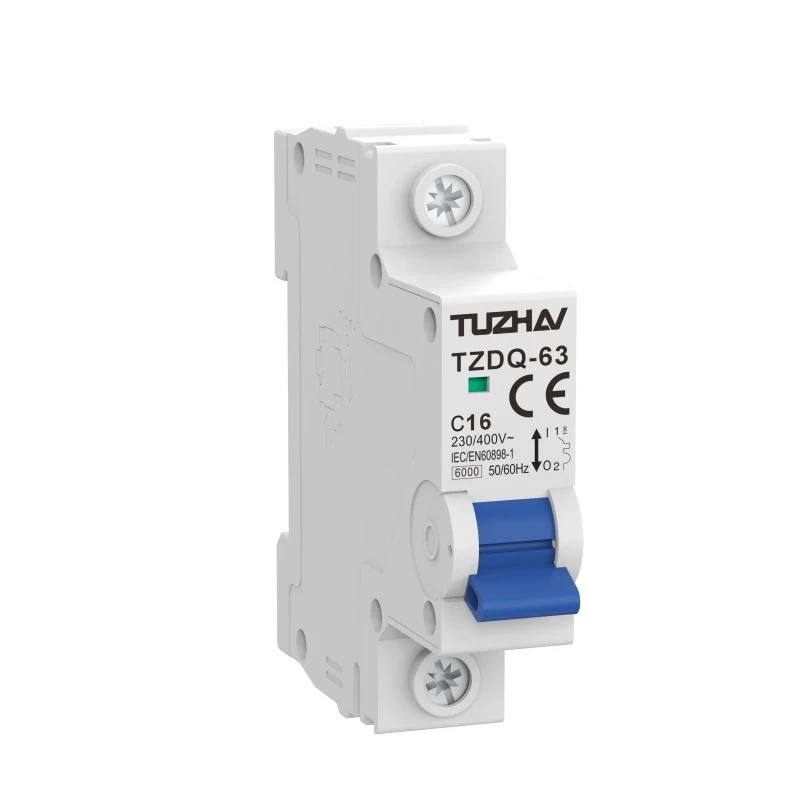
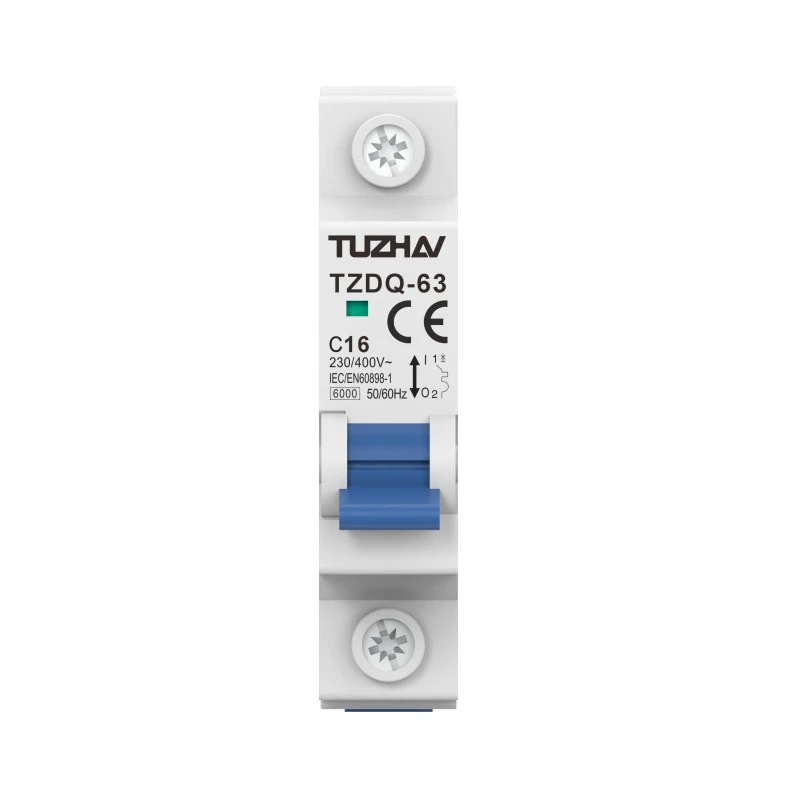
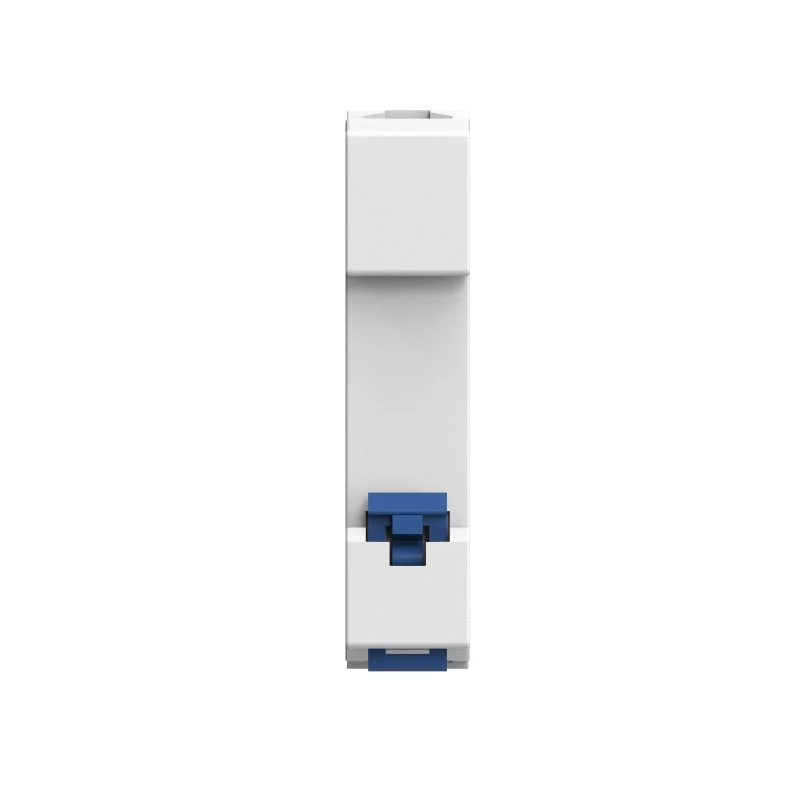
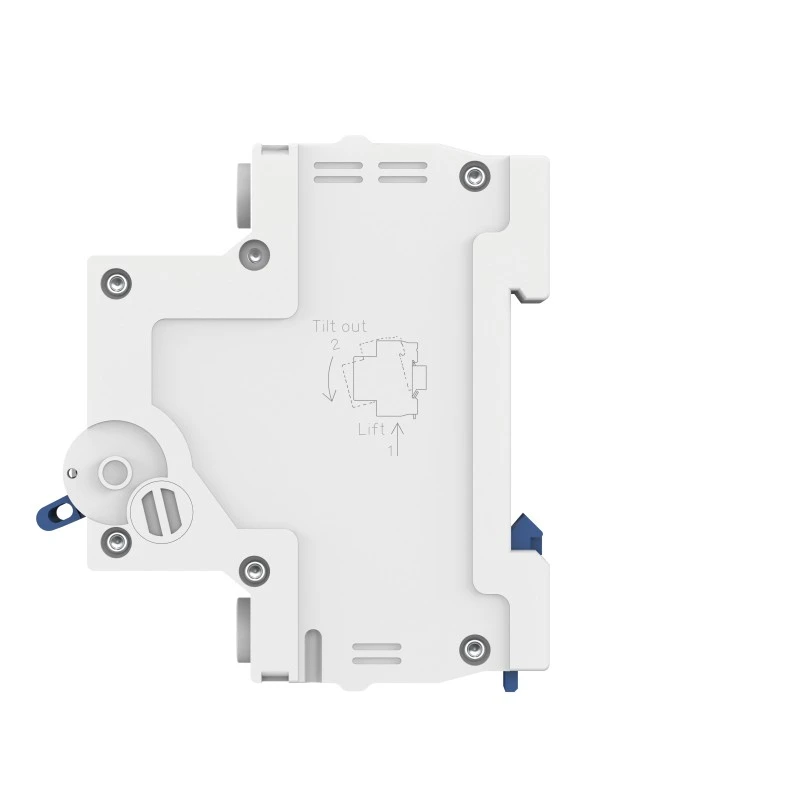
The 16A Miniature Circuit Breaker puts thermal overload and magnetic short-circuit protection in one 18mm module. The bimetallic strip handles a sustained overload; the magnetic coil releases the contacts on a high fault current. C curve is the default, with B and D available when the connected equipment calls for a different instantaneous range.
Mounting is 35mm DIN rail in 1P, 1P+N, 2P, 3P and 4P, with a three-position handle that shows on, off or tripped. Breaking capacity comes in 6kA or 10kA, chosen against the fault level at your board.
A 16A socket does not automatically call for a 16A breaker — and a 16A breaker does not automatically suit every group of sockets. What decides it is the combination of connected load, cable capacity, start-up behaviour and the fault level at the board. Get any of those wrong and the result is either nuisance tripping or a circuit that is not actually protected.
The 16A Miniature Circuit Breaker is offered in B, C and D curves because different socket circuits carry very different loads. The table below shows what changes between them.
| Curve | B CurveOPTIONAL | C CurveDEFAULT | D CurveOPTIONAL |
| Magnetic range |
3–5 × In |
5–10 × In |
10–20 × In |
| Best fit |
Resistive loads with almost no start-up surge |
Mixed socket circuits with moderate inrush |
Loads with a heavier start-up current |
| Watch for |
Trips on any inductive load start |
Compressor starts that exceed the threshold |
Fault-loop conditions and disconnection times |
No trip curve can promise that nuisance tripping will never happen. A C curve on a 16A device gives a conventional magnetic range of 80–160A, but whether a fridge compressor starts cleanly depends on its own start-up profile and on the circuit impedance. Check the equipment data before the curve is fixed.
Work out the expected demand from the equipment on the circuit — which appliances may run at the same time, their rated input current and any start-up current. The total matters more than any single appliance.
Cross-section, installation method, grouping, ambient temperature and local wiring rules all affect the allowable current. The breaker protects the cable — if the cable cannot carry the rating, the coordination is wrong.
Refrigerators, compressors and some electronic power supplies draw a brief current well above their running level. Check those figures against the time-current curve before choosing between C and D.
Choose between 6kA and 10kA only after checking the prospective short-circuit current at the installation point, and confirm the required disconnection time can still be met.
Air conditioners, ovens, water heaters and similar high-power equipment usually need their own circuit. Size them from the nameplate current and the manufacturer's instructions — not from a general appliance-size rule.
| Product type | Miniature Circuit Breaker (MCB) |
| Rated current | 16A |
| Trip curve | Type C by default; Types B and D available as options |
| Rated voltage | AC 230V / 400V; DC version subject to confirmation |
| Breaking capacity | 6kA / 10kA options |
| Pole configurations | 1P, 1P+N, 2P, 3P, 4P |
| Mounting | 35mm DIN rail |
| Housing material | Flame-retardant PC, as specified |
| Handle indication | ON / OFF / intermediate trip position, subject to model |
| Ambient temperature | -25°C to +70°C, subject to product rating and derating requirements |
| Degree of protection | IP20, for installation in a suitable enclosure |
| Single-pole dimensions | 18mm W × 80mm H × 66mm D |
| Referenced standards | IEC 60898-1 and GB 10963.1; confirm applicable editions and certification |
Specifications are based on the supplied product information. Confirm the exact model, rated voltage, breaking capacity, temperature limits and applicable documentation before ordering.
The right rating and curve depend on the wiring system, the connected equipment and the fault conditions. Some installations will need a different rating or additional forms of protection.
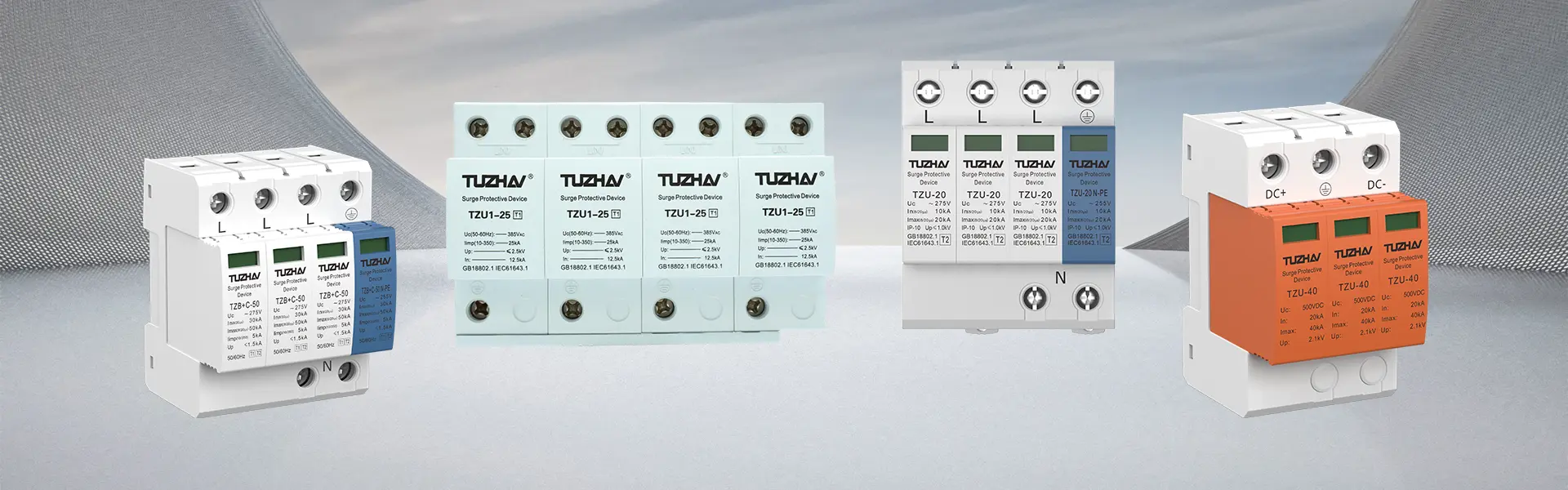
Four devices commonly sit in a residential board, and each covers a different fault type. An MCB is not a substitute for any of the others:
Overcurrent protection against overload and short circuit on the branch circuit.
Residual-current protection against the earth-leakage conditions the design specifies.
Combines residual-current and overcurrent protection in a single device.
Limits transient overvoltage. An SPD may need a backup protector per its manufacturer.
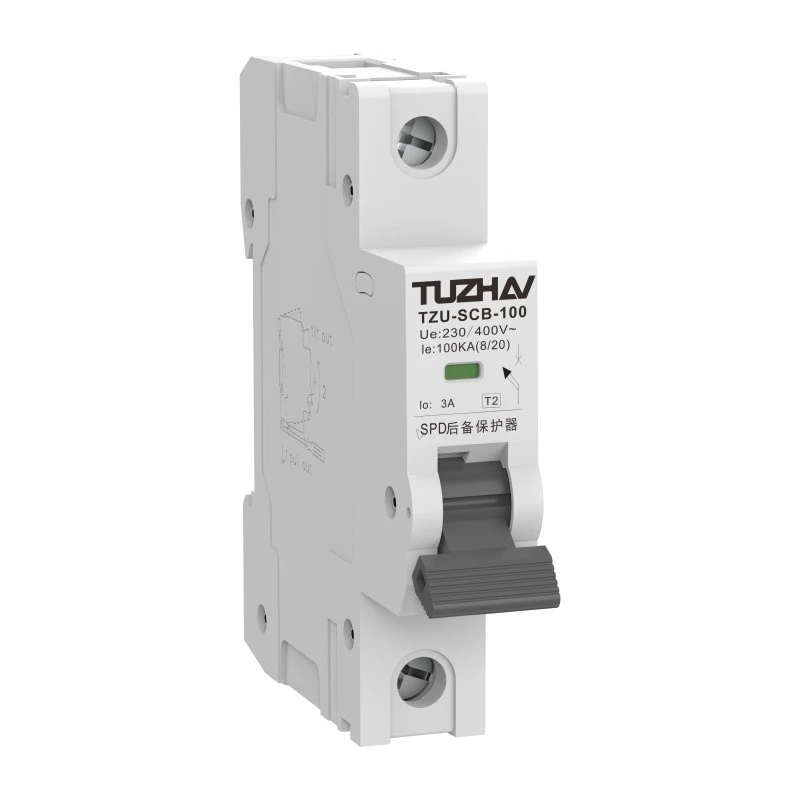
Where the whole board is being built, the protection package can come from one place: MCBs, SPDs, SPD backup protectors and distribution boxes, all matched to the same panel layout.
Quality control starts at incoming material inspection — conductive components, bimetallic elements and housing material are all checked on arrival. Finished units go through voltage-withstand, continuity and trip-function checks, and batch samples are run for overload, short-circuit, humidity and temperature performance. Where these records matter for project approval, request the test conditions, sampling plan and the reports for the exact model. A stated test category does not by itself prove a particular service life.
OEM marking and packaging are supported, so the cover, handle and carton can carry your brand and language set — send the artwork and tell us how you want the marking customized. Production runs in our China factory, and because we also build SPDs and distribution boxes, one supplier can cover a complete board rather than a single component.
When you request a quotation, the following information keeps the specification on target:
It may be suitable when the combined demand, cable capacity, start-up current and installation conditions all comply with the applicable requirements. Consider the total connected load and the possibility of simultaneous starts rather than relying on the breaker rating alone.
Possibly, but the right rating depends on the unit's nameplate current, the manufacturer's instructions, its start-up characteristics, cable sizing and local regulations. Some units need a dedicated circuit or a different rating. Never size the breaker from horsepower alone.
No curve can guarantee that. A C curve gives a conventional magnetic range of 5–10 times rated current — 80–160A for a 16A device — but suitability depends on the load's start-up current, the circuit impedance and the fault-disconnection performance the design requires.
A 1P device switches the protected pole, typically the line conductor in a single-phase installation. A 1P+N device is designed to switch both line and neutral according to its specified configuration. Check the exact switching and protection arrangement in the datasheet and in the local wiring rules. Neither version provides residual-current protection by itself.
Isolate the circuit as required, identify the cause of the trip and check for overload or short circuit. Once the fault is corrected, follow the manufacturer's instructions for resetting the handle. Repeated tripping should be investigated, not reset away.
Both options are listed in the specifications. Confirm which ratings are available for the selected pole configuration and voltage, and choose the version according to the prospective short-circuit current and the applicable installation requirements.
OEM marking and packaging can be arranged for the selected configuration. Confirm the artwork, packaging specification, minimum order quantity and lead time before placing the order.
Request the technical datasheet, dimensional drawing, time-current characteristic and the available certificates or test reports. Verify that each document covers the exact model, rated voltage, breaking capacity and pole configuration required for the project.
We will confirm the 16A Miniature Circuit Breaker curve, pole configuration and breaking capacity for your board, and reply with wholesale pricing, samples and lead time.
Address
No.51, Changjiang Road, Wenzhou Bridge Industrial Zone, Beibaixiang Town, Yueqing City, Zhejiang Province, China
Tel