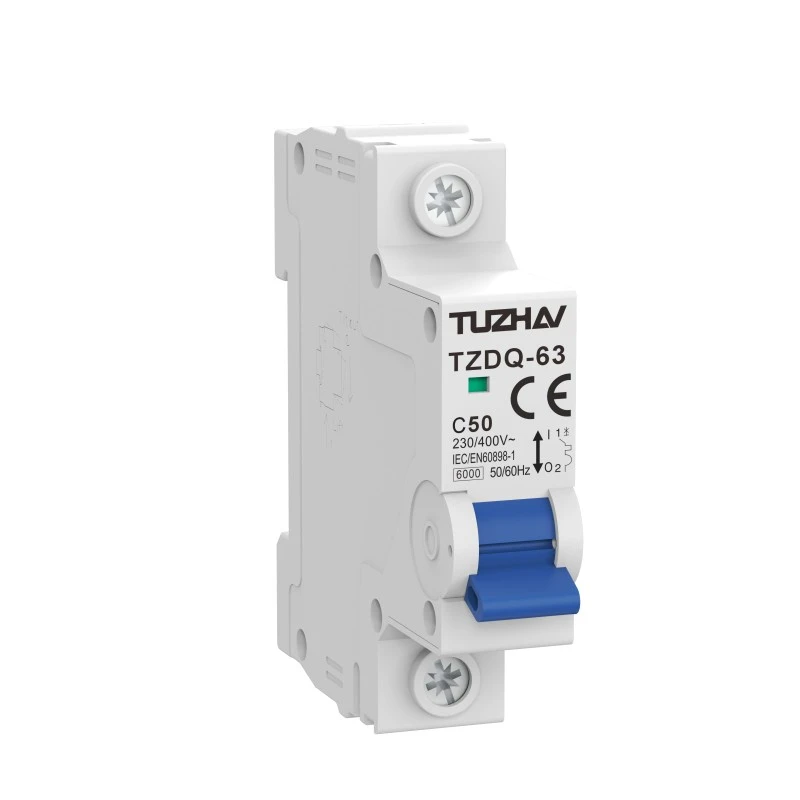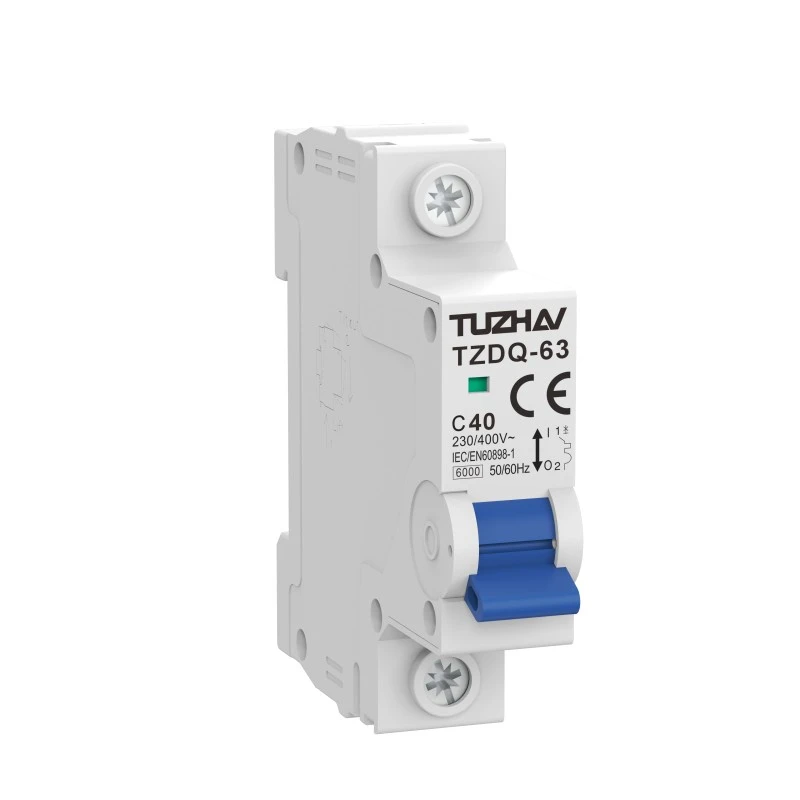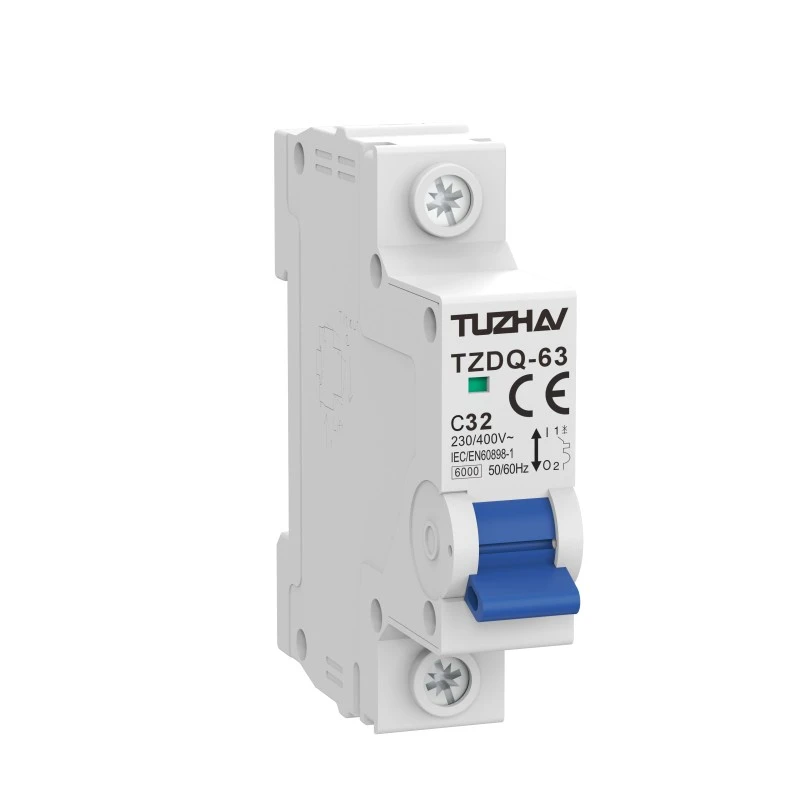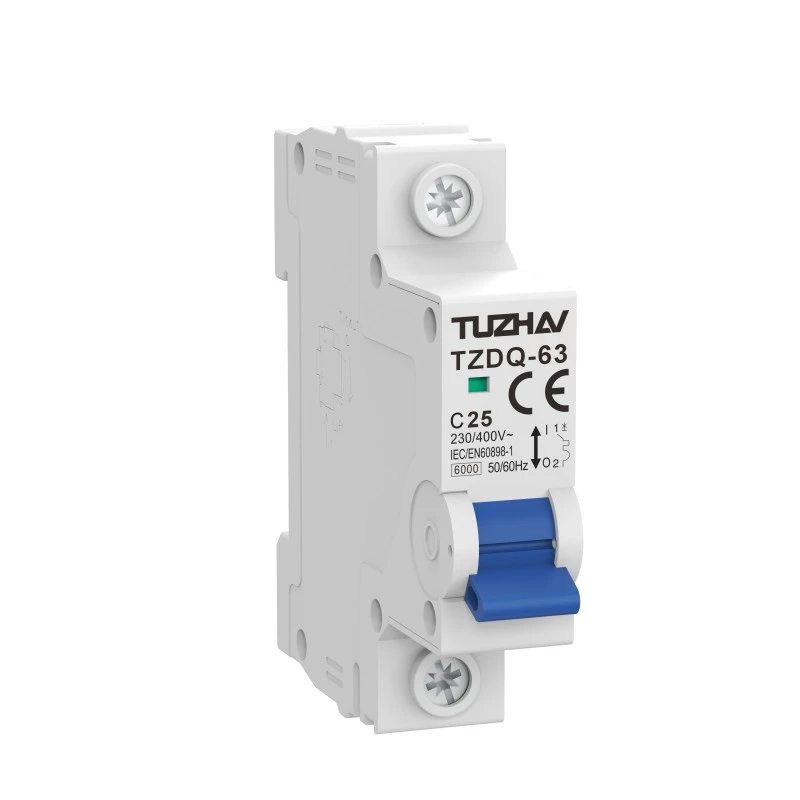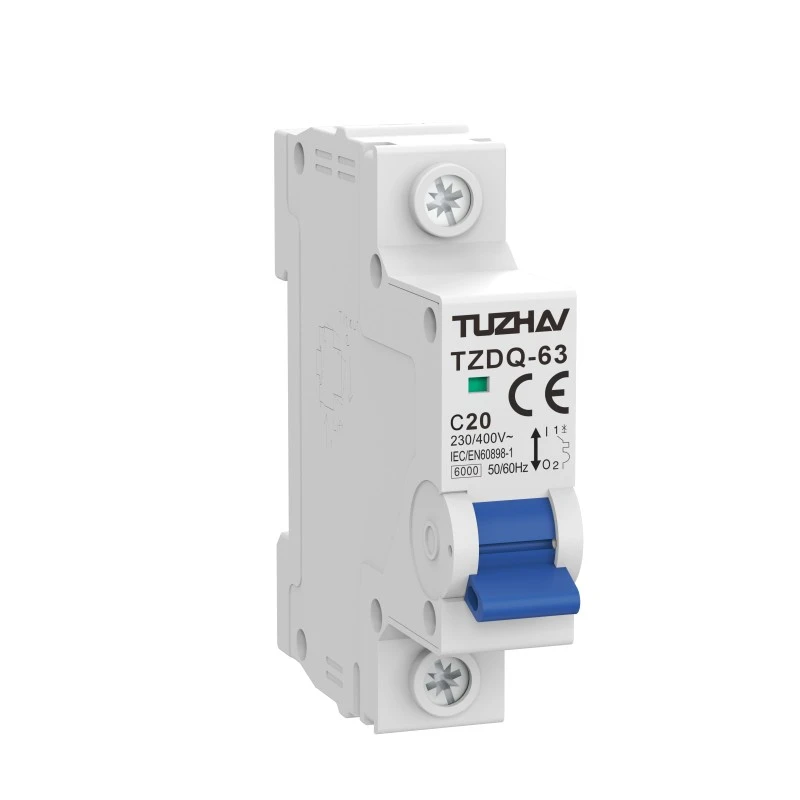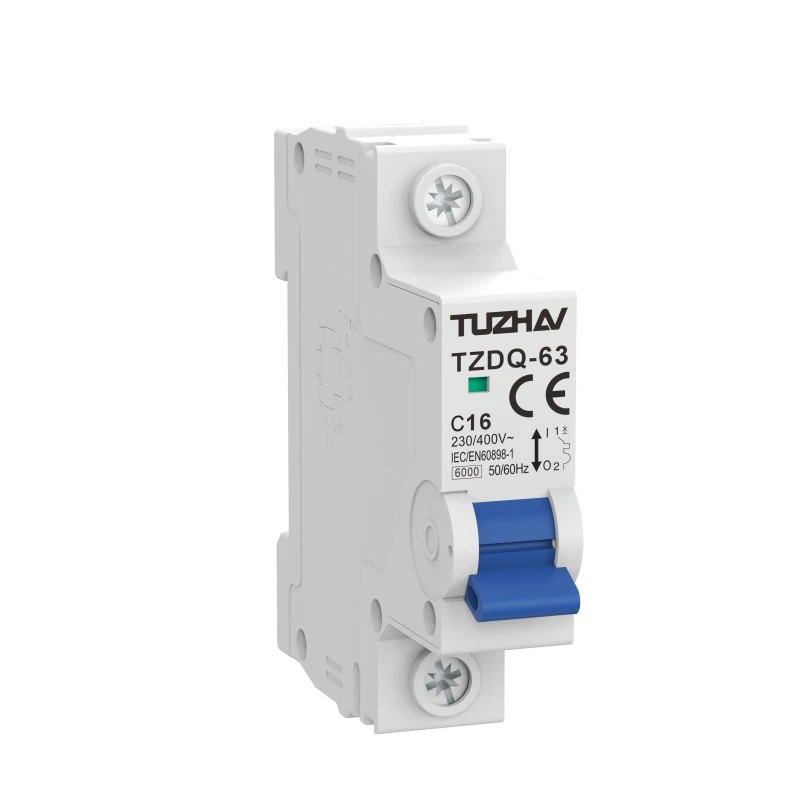
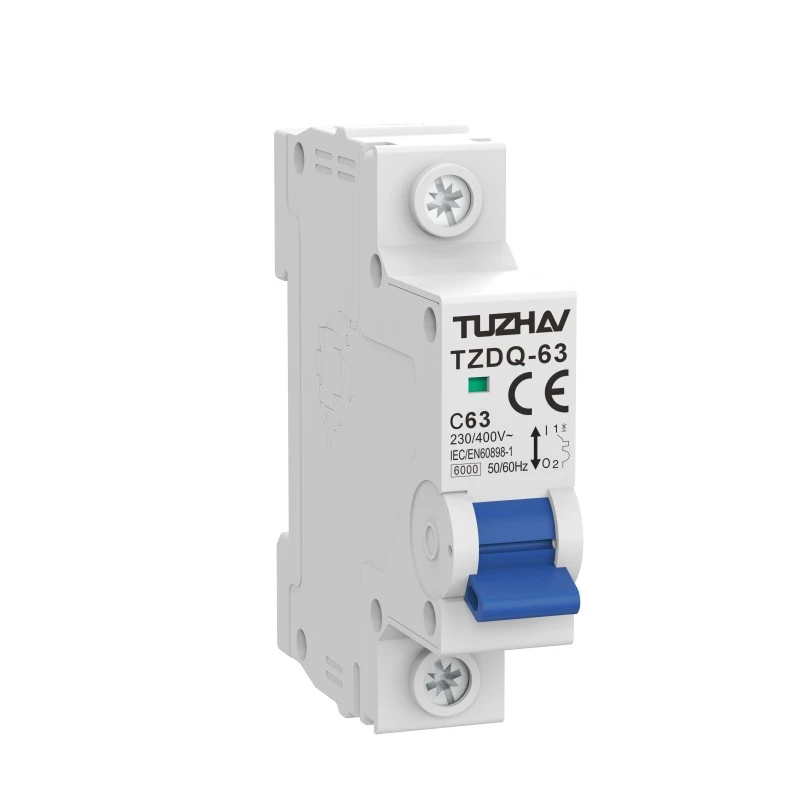
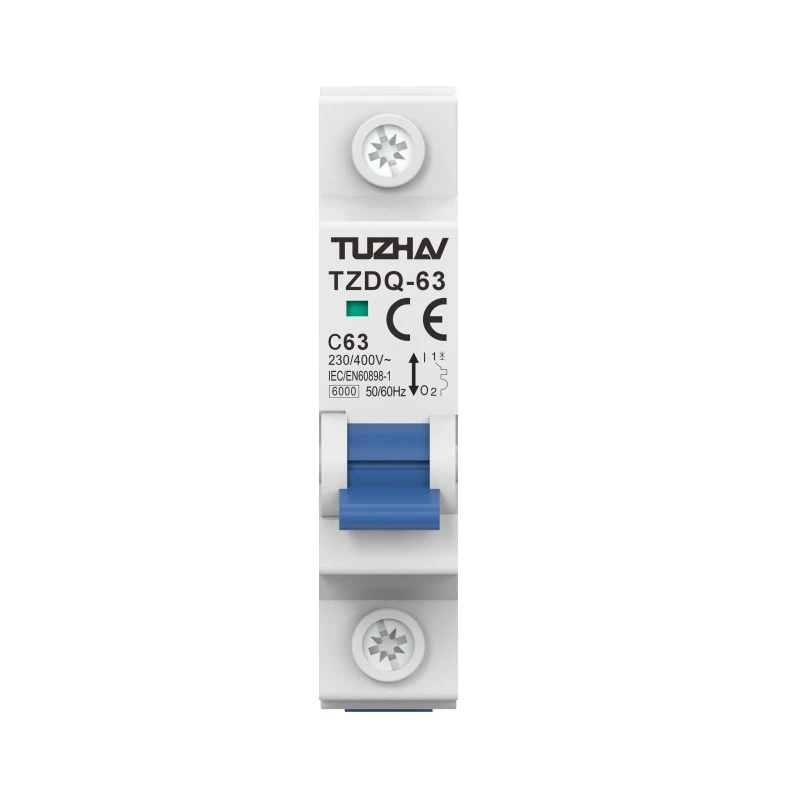
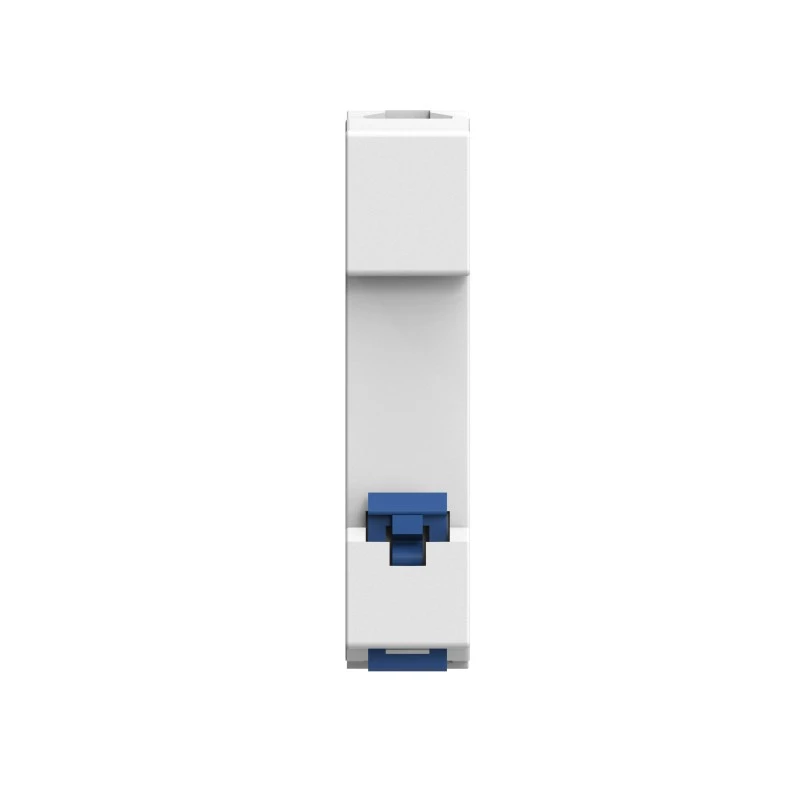
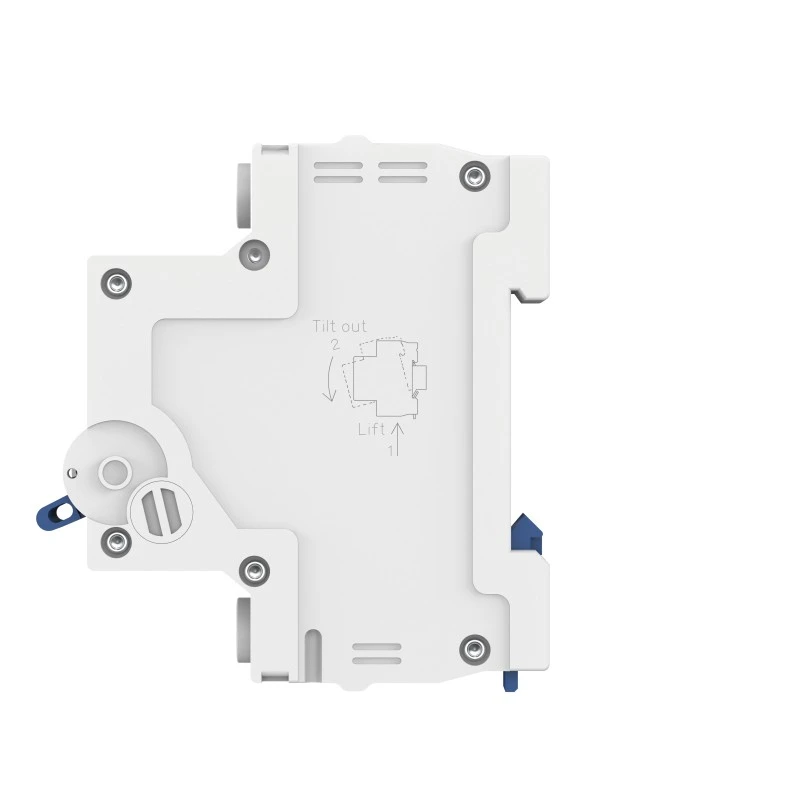
A distribution incomer carries the full load of every branch circuit behind it, so the breaker has to match the calculated demand, the feeder cable capacity and the prospective short-circuit current at the installation point. The 63A Miniature Circuit Breaker is built for that role in compatible low-voltage distribution panels. Its thermal-magnetic tripping mechanism gives you two levels of protection: thermal protection against sustained overloads and magnetic protection against high short-circuit currents.
With C and D tripping curves, 6kA and 10kA breaking capacities, and 1P, 1P+N, 2P, 3P and 4P configurations, you can match the device to your actual distribution arrangement instead of working around a single fixed option. It mounts on standard 35mm DIN rail and installs inside an appropriate electrical enclosure.
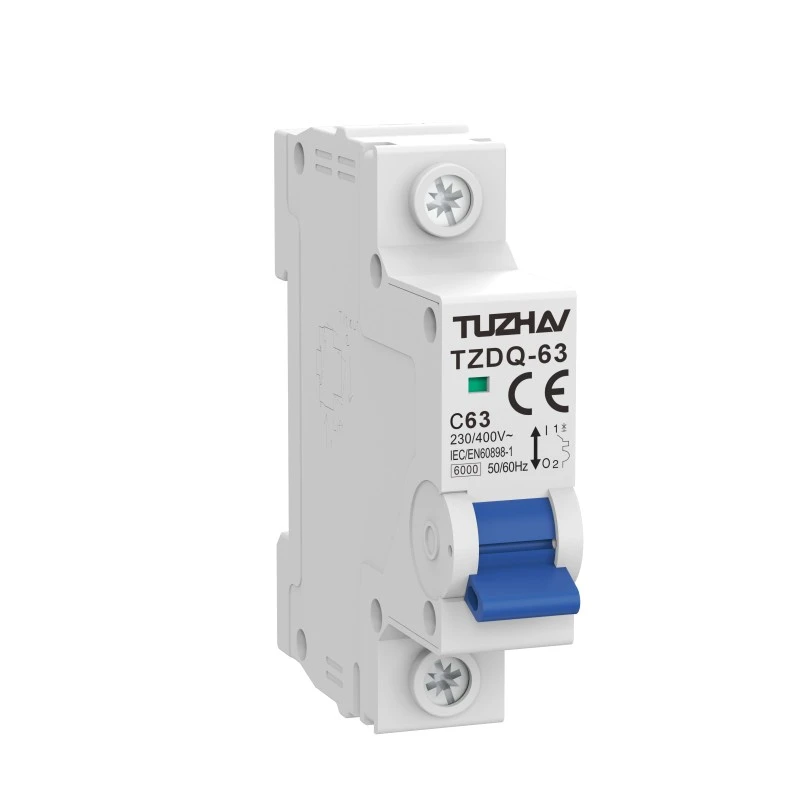
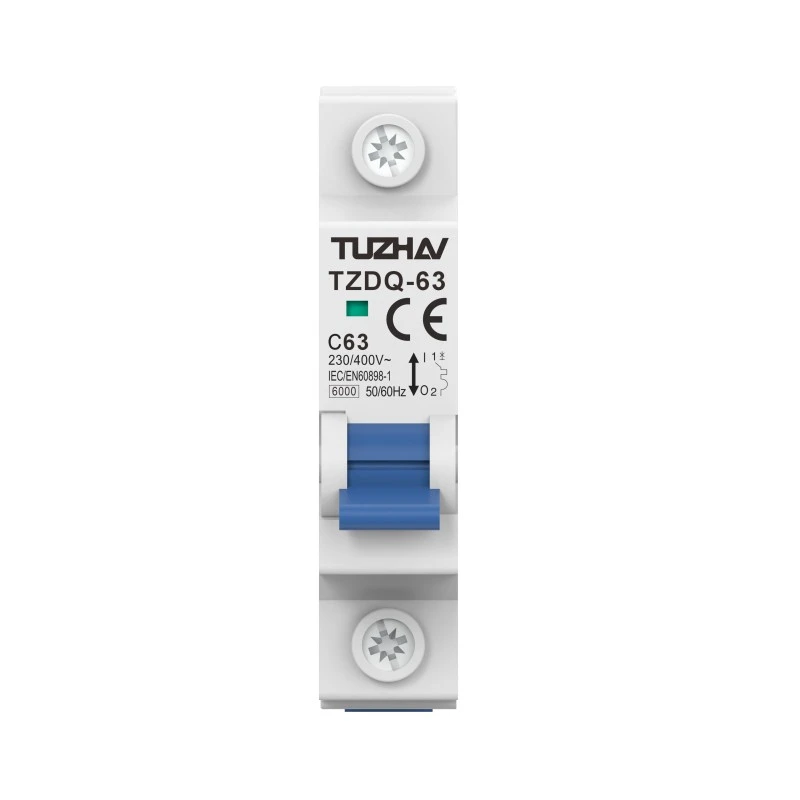
These are the figures you will need for selection and project evaluation.
| Parameter | Specification |
|---|---|
| Product Type | Miniature Circuit Breaker (MCB) |
| Rated Current | 63A |
| Tripping Curve | C curve standard; D curve optional |
| Rated Voltage | AC 230V / 400V |
| DC Version | Available on request; confirm rated DC voltage and configuration |
| Breaking Capacity | 6kA / 10kA options |
| Pole Configurations | 1P, 1P+N, 2P, 3P, 4P |
| Mounting | 35mm DIN rail |
| Housing Material | Flame-retardant PC |
| Handle Indication | Three-position handle with trip indication |
| Operating Temperature | -25°C to +70°C |
| Protection Degree | IP20 |
| Single-Pole Dimensions | 18mm (W) × 80mm (H) × 66mm (D) |
| Reference Standards | IEC 60898-1, GB 10963.1 (subject to applicable AC model) |
Before you order, note:
A 63A incomer suits installations where the calculated demand and protective-device coordination support the selected breaker.
Suitability depends on the actual electrical installation, not the building type. A 63A rating alone does not make any breaker suitable for every main board. The 63A Miniature Circuit Breaker is also commonly paired with our surge protection devices and distribution boxes in coordinated panel builds.
A sustained excess current heats the internal bimetallic element until it bends and trips the mechanism, disconnecting the circuit. Tripping time depends on how far the current exceeds the rating and how long it lasts, so a small overload does not trip instantly.
A sufficiently high fault current operates the electromagnetic mechanism and trips the breaker rapidly. The breaking capacity defines the maximum short-circuit current the device is designed to interrupt, which is why the 6kA or 10kA choice has to match the fault level on site.
The curve sets the instantaneous magnetic tripping range, so the choice comes down to load characteristics and fault-disconnection requirements. In is the rated current.
| Selection Factor | C Curve | D Curve |
|---|---|---|
| Instantaneous magnetic tripping range | 5–10 × In | 10–20 × In |
| Load characteristics | Moderate inrush current | Higher inrush current |
| Typical use | General distribution loads | Loads with significant starting current |
| Main verification point | Load characteristics and fault protection | Inrush current and required fault-disconnection conditions |
C curve fits general distribution circuits with moderate inrush. D curve suits equipment with higher starting currents, provided the installation still meets the required fault-disconnection conditions. For mixed-load panels, base the decision on the real equipment characteristics, not the number of motors or appliances on the drawing.
| Comparison | MCB | MCCB |
|---|---|---|
| Typical application | Final and smaller distribution circuits | Larger distribution systems and higher-demand applications |
| Current rating | Fixed rated-current options | Fixed or adjustable settings, depending on model |
| Trip characteristics | Defined by the selected tripping curve | Depends on the installed trip unit |
| Breaking capacity | Depends on the specific model | Depends on the specific model |
| Installation | Commonly DIN-rail mounted | DIN-rail or other arrangements, depending on design |
A 63A MCB can serve as a distribution incomer when its ratings and protective characteristics satisfy the installation. An MCCB may be the better choice where higher breaking capacity, adjustable protection or other system-specific requirements apply. Rated current alone never settles the question — compare the actual specifications and coordination data.
| Device | Main Function |
|---|---|
| Incomer MCB | Overload and short-circuit protection within its rated characteristics |
| Branch MCBs | Protect individual outgoing circuits according to their ratings and wiring conditions |
| Surge Protective Device (SPD) | Limits transient overvoltages in the electrical installation |
| SPD Backup Protection | Provides the overcurrent protection specified by the SPD manufacturer, where required |
An SPD does not replace an MCB — the two address different hazards, and the SPD's backup protection must follow the manufacturer's installation instructions. Likewise, an upstream 63A breaker and downstream 32A or 40A breakers do not automatically give you selectivity. That depends on fault current, time-current curves and tested coordination data.
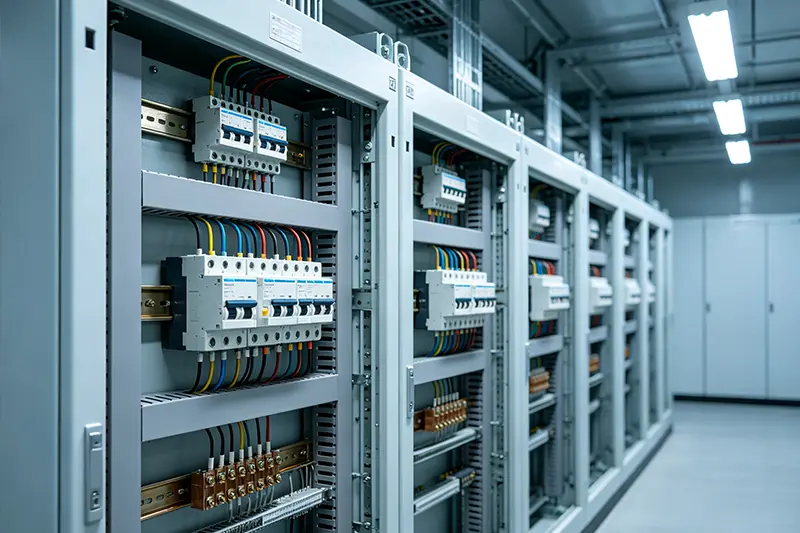
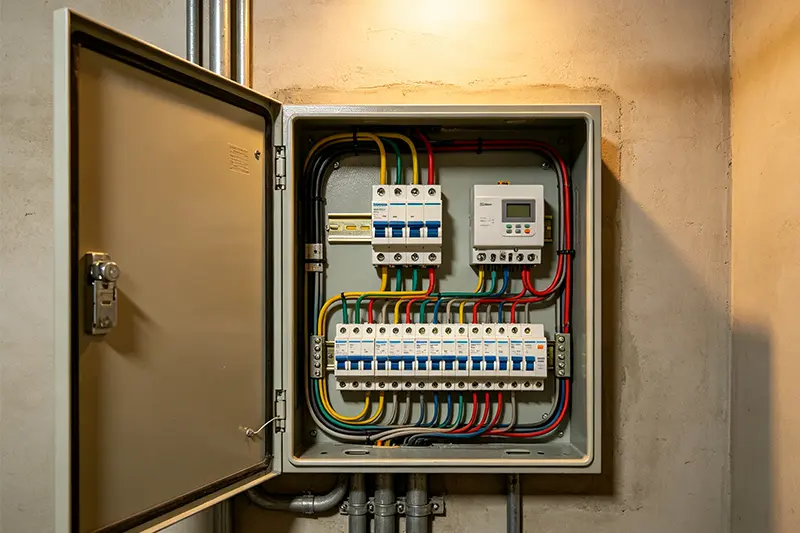
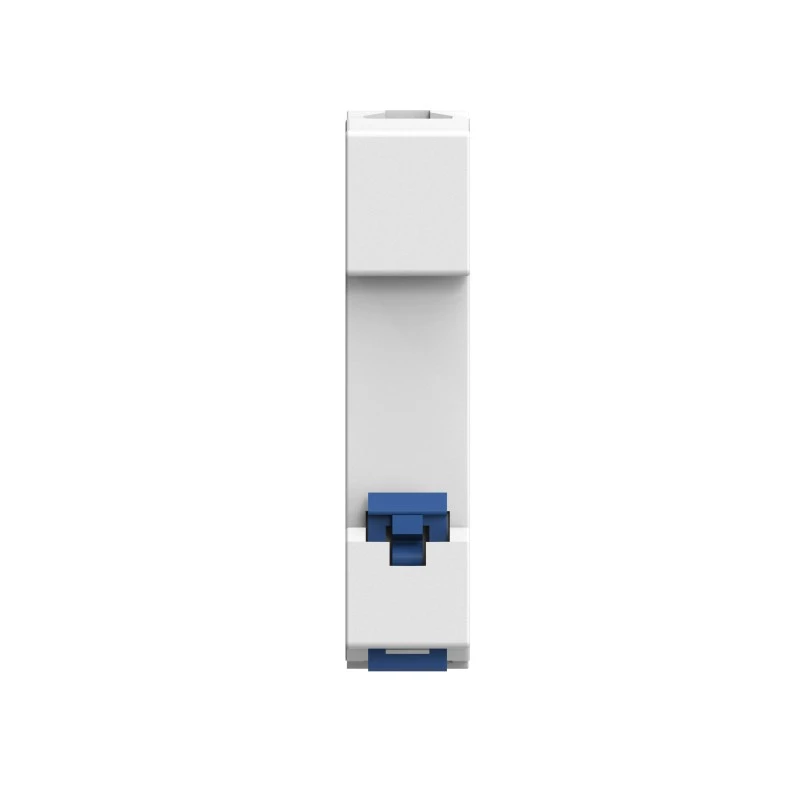
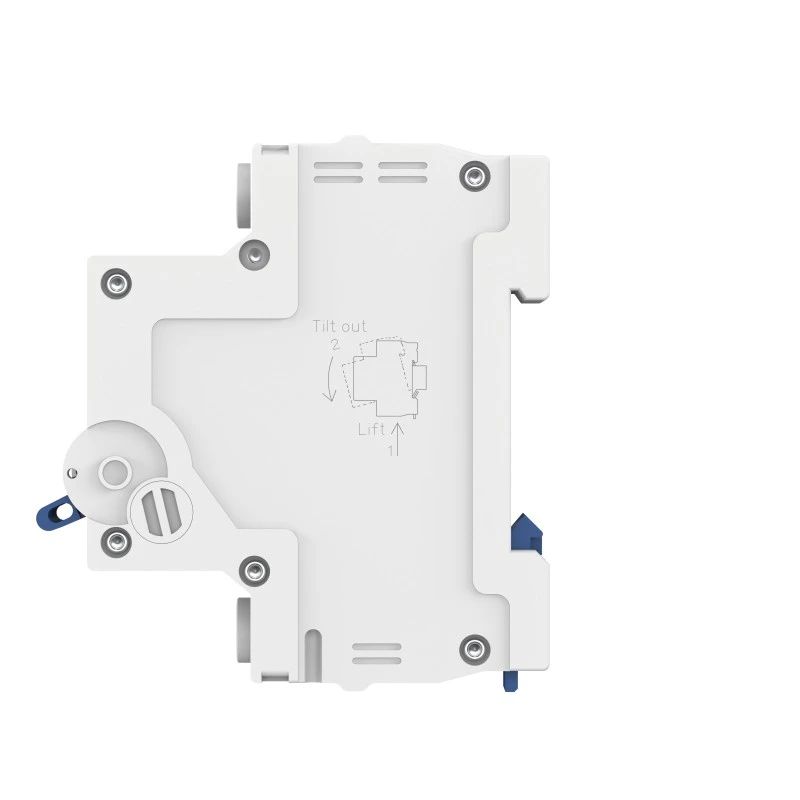
The device fits a standard 35mm DIN rail, so it drops into compatible distribution panels without adapters. Single-pole dimensions are 18mm wide, 80mm high and 66mm deep; for multi-pole versions, check the overall footprint and terminal arrangement before finalizing the enclosure layout.
The IP20 rating means the breaker belongs inside a suitable enclosure, not exposed to outdoor conditions or water. During installation, pay attention to conductor size and terminal compatibility, the tightening torque specified by the manufacturer, operating temperature and panel ventilation, required clearances and enclosure dimensions, and the wiring and electrical safety regulations that apply on site.
Installation and protective-device selection should be carried out by a qualified electrical professional.
Documentation matters when components go into distribution panels or get specified for commercial projects. Before confirming an order, check what is available for the exact model: technical datasheets and dimensional drawings, conformity declarations and certificates, routine electrical and trip-function test records, temperature-rise or short-circuit test reports where performed, and product identification and traceability information.
Every batch leaving our China factory goes through routine trip and electrical checks, so quality is verified unit by unit rather than declared on paper. Product identification and traceability information is included so you can tie the delivered goods back to the approved specification. A reference to IEC 60898-1 or GB 10963.1 does not by itself establish third-party certification — always verify the standards, test results and certification status against the actual model. Datasheets are available on our download page.
OEM printing is supported on this product. As a manufacturer and supplier working directly with panel builders and project buyers, we can customize logo artwork, pole configuration, tripping curve and packaging to your order. Confirm the electrical specifications and configuration for your application before requesting a quotation or sample.
| Information Required | Details to Confirm |
|---|---|
| Rated Current | 63A |
| Tripping Curve | C or D |
| Rated Voltage | AC 230V / 400V or confirmed DC rating |
| Breaking Capacity | 6kA or 10kA |
| Pole Configuration | 1P, 1P+N, 2P, 3P or 4P |
| Destination Market | Applicable local standards and documentation |
| Branding | OEM printing and logo artwork |
| Application | Distribution panel and incomer requirements |
For project purchases, send the supply arrangement, prospective short-circuit current and a single-line diagram — that is usually enough to confirm the configuration. MOQ, sample availability, lead time, warranty terms and available compliance documents are confirmed for each specific order.
Yes, where the calculated demand, feeder cable capacity, prospective short-circuit current, pole configuration and local regulations all support it. The rated current alone does not establish suitability.
It is the maximum short-circuit current the breaker is designed to interrupt under specified conditions. A 10kA version has a higher rated breaking capacity than a 6kA version. Match it to the prospective fault current at the installation point.
A C curve typically trips magnetically at 5–10 times rated current; a D curve at 10–20 times. Choose according to load inrush characteristics and the required fault-disconnection conditions.
There is no universal size. Cable selection depends on conductor material, insulation, installation method, ambient temperature, grouping, length and voltage drop. Proposed 25mm² or 35mm² copper conductors still have to be verified against the applicable wiring regulations and calculated conditions.
Yes. The product is available in 3P and 4P configurations. The correct version depends on the supply arrangement and neutral switching requirements — confirm rated voltage and applicable specifications before selection.
Not automatically. Both must be evaluated against the required breaking capacity, trip characteristics, rated voltage and protection requirements. Same rated current does not mean same performance or the same application limits.
It can be used in a distribution system that includes an SPD, but the SPD requires its own specified backup overcurrent protection where applicable. Check the SPD manufacturer's instructions and the complete protection arrangement.
Yes. Logo artwork, product configuration, MOQ, sample arrangements and lead time are confirmed before production. Send your requirements and we will come back with the details.
Address
No.51, Changjiang Road, Wenzhou Bridge Industrial Zone, Beibaixiang Town, Yueqing City, Zhejiang Province, China
Tel